Ski Hostel vs SnowTrex: affordable New Year ski trips
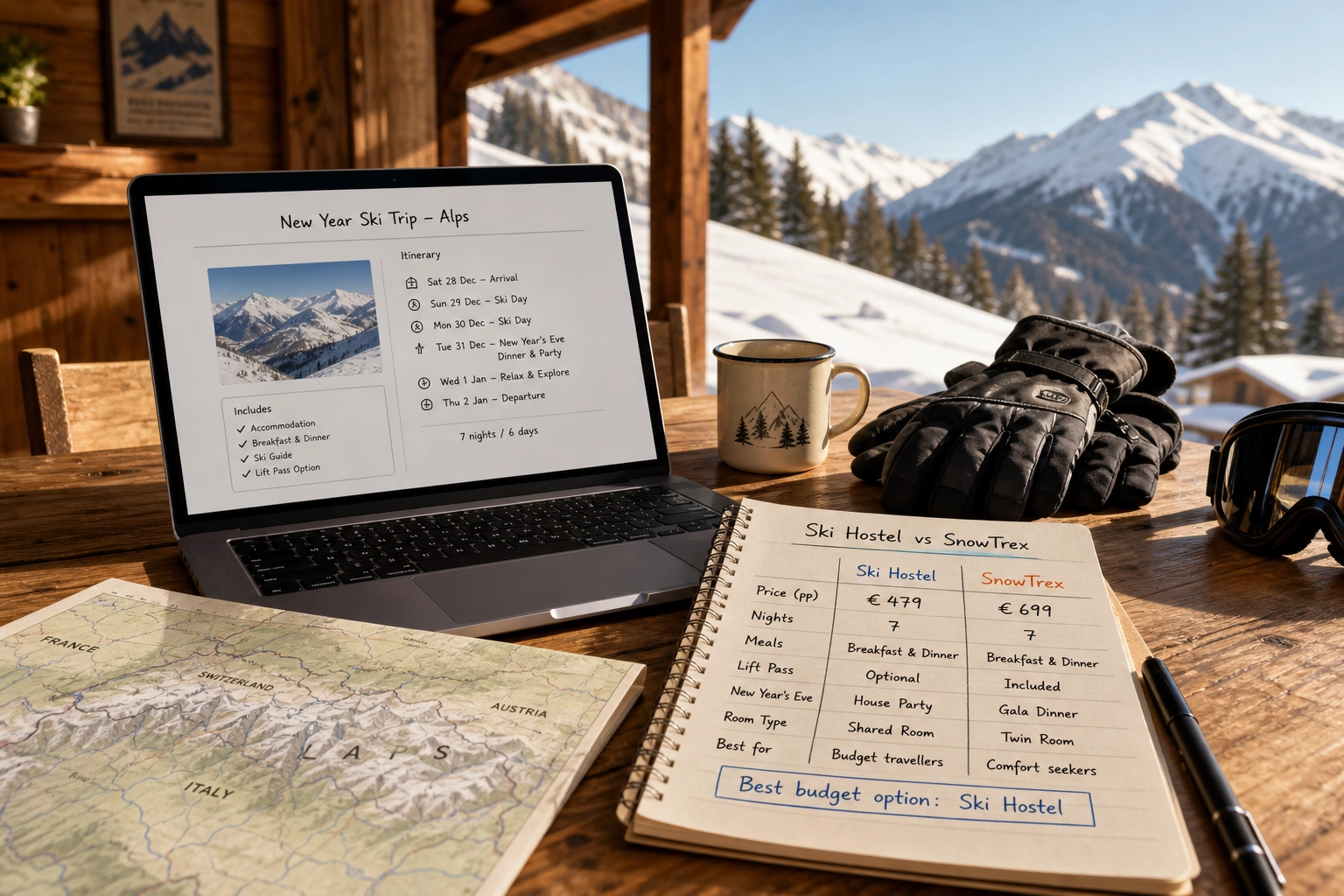
Booking a ski trip over the New Year week usually requires emptying your savings account. Between December 26th and January 2nd, the European Alps experience their highest demand of the year. Mega-resorts in France, Austria, and Switzerland routinely hike accommodation prices by 50% to 100%, knowing that school holidays and the romanticized desire for a “white New Year” guarantee full occupancy regardless of the cost.
For budget-conscious skiers, snowboarders, solo travelers, and digital nomads, this peak pricing feels like a lockout. The traditional advice—booking a private chalet in Courchevel or a four-star hotel in Zermatt—is completely out of touch with reality if you are trying to keep costs reasonable.
However, an affordable New Year ski week is entirely possible if you change how you book and where you stay. Getting on the mountain for less during the holidays requires looking past the flagship mega-resorts and leveraging specialized package models. Today, two of the most effective ways to bypass peak-season price gouging are booking through a massive budget aggregator like SnowTrex, or opting for an all-inclusive, community-driven experience like Ski Hostel.
This guide breaks down the financial realities of holiday skiing, compares the aggregator approach against the hostel-package approach, and helps you decide which route will actually save you money without ruining your New Year’s Eve on the mountain.
The Reality of New Year Ski Pricing in the Alps
Before comparing specific booking options, it helps to understand why the New Year week destroys ski budgets and where the hidden financial traps lie.
During the last week of December, you are competing with families across Europe whose children are out of school, university students on winter break, and corporate professionals forced to take their remaining annual leave. This massive spike in demand creates a seller’s market.
When you attempt a traditional DIY booking (piecing together flights, a hotel, and lift passes directly through a resort website), you run into three major budget killers:
- Dynamic Lift Pass Pricing: Many major resorts have adopted airline-style dynamic pricing. If you buy a six-day pass for the New Year week in December, you will pay the absolute maximum rate.
- The Minimum Stay Trap: Hotels and chalet operators know they can sell out, so they enforce strict seven-night minimums, usually running Saturday-to-Saturday. If you only want to ski for five days, you are still paying for seven nights of premium lodging.
- The “Festive Supplement”: Restaurants and hotels frequently mandate expensive “Gala Dinners” on New Year’s Eve. If you are staying half-board at a traditional hotel, you might be forced to pay an extra €100-€200 per person for a fixed menu you didn’t even want.
To beat these markups, you have to find providers who have either pre-negotiated bulk rates (aggregators) or operate a closed-loop system where lodging, food, and skiing are bundled into one fixed price (all-inclusive hostels).
If you are just starting to map out your budget, reading up on how to plan an affordable ski trip in the Swiss Alps is a great foundation for understanding regional pricing differences.
SnowTrex: The Mega-Aggregator Approach
SnowTrex is one of the largest specialized winter sports tour operators in Europe. Their primary business model revolves around bundling budget accommodation with lift passes across hundreds of resorts in France, Austria, and Italy.
When you search for a New Year’s trip on their platform, you are typically presented with self-catering apartments in massive, purpose-built ski domains.
How the SnowTrex Model Works
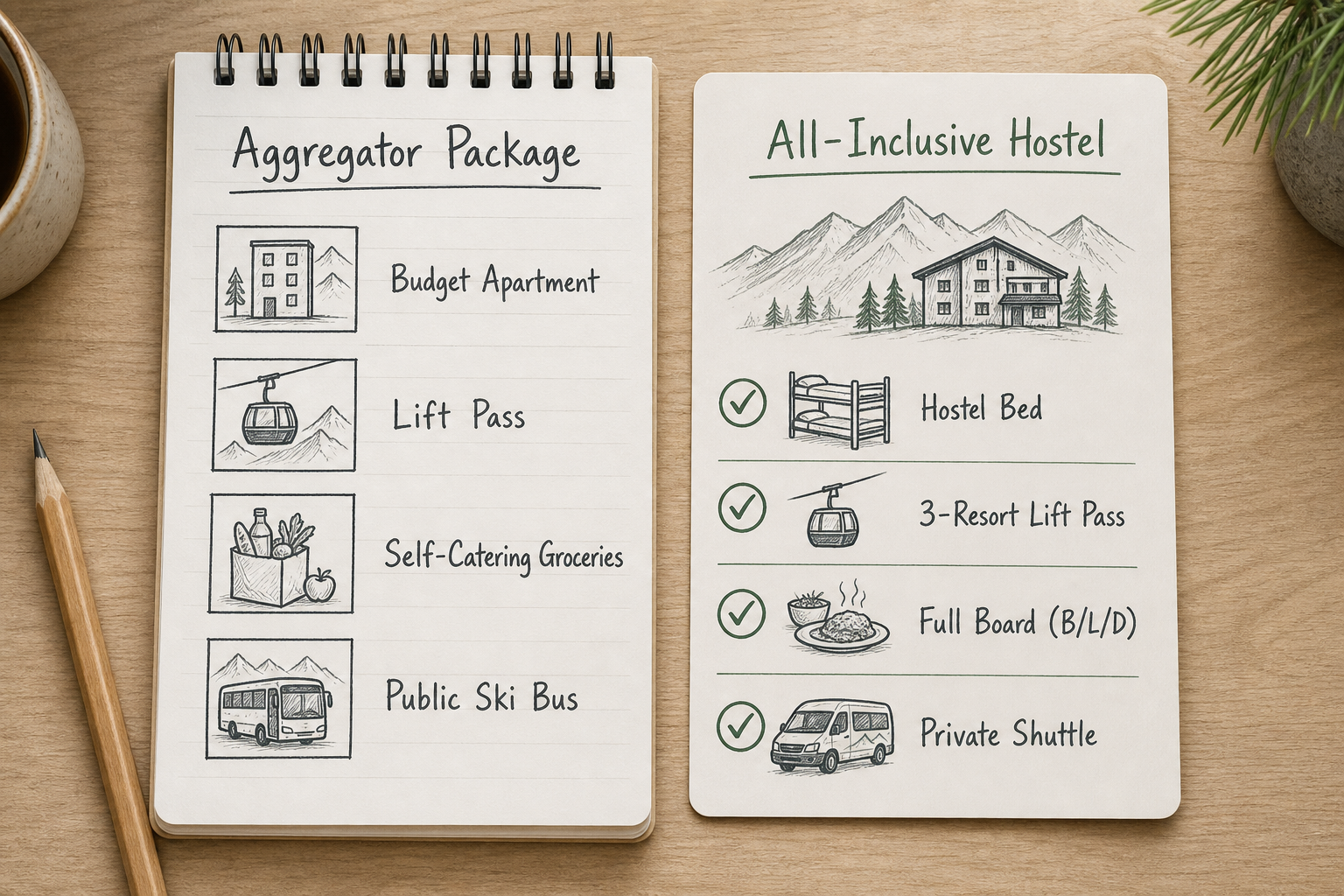
SnowTrex leverages immense bulk-buying power. By committing to thousands of room nights and lift passes months in advance, they secure wholesale rates that they pass on to the consumer. The core of a SnowTrex package is almost always: Basic Accommodation + Lift Pass.
For example, their holiday deals often highlight extreme budget options in the French Southern Alps. A classic offering might look like their packages in La Joue du Loup or Les Flocons du Soleil, where you can secure 7 nights including a lift pass starting around late December.
The Advantages of SnowTrex for New Year
- Included Lift Passes: Because the lift pass is baked into the initial price, you are insulated from the resort’s dynamic peak-week pricing. This is the single biggest factor in keeping the upfront cost low.
- Access to Massive Ski Domains: SnowTrex often features accommodations in satellite villages connected to massive ski areas (like the Milky Way in Italy or Les Sybelles in France). You get access to 300km+ of piste without paying the premium to sleep in the central resort town.
- Economy of Scale for Groups: If you are traveling as a group of four to six people, piling into a self-catering apartment splits the lodging cost dramatically, bringing the per-person price down to rock-bottom levels.
The Drawbacks and Hidden Costs
While the sticker price is incredibly appealing, the SnowTrex model—specifically the self-catering apartment approach—comes with notable compromises.
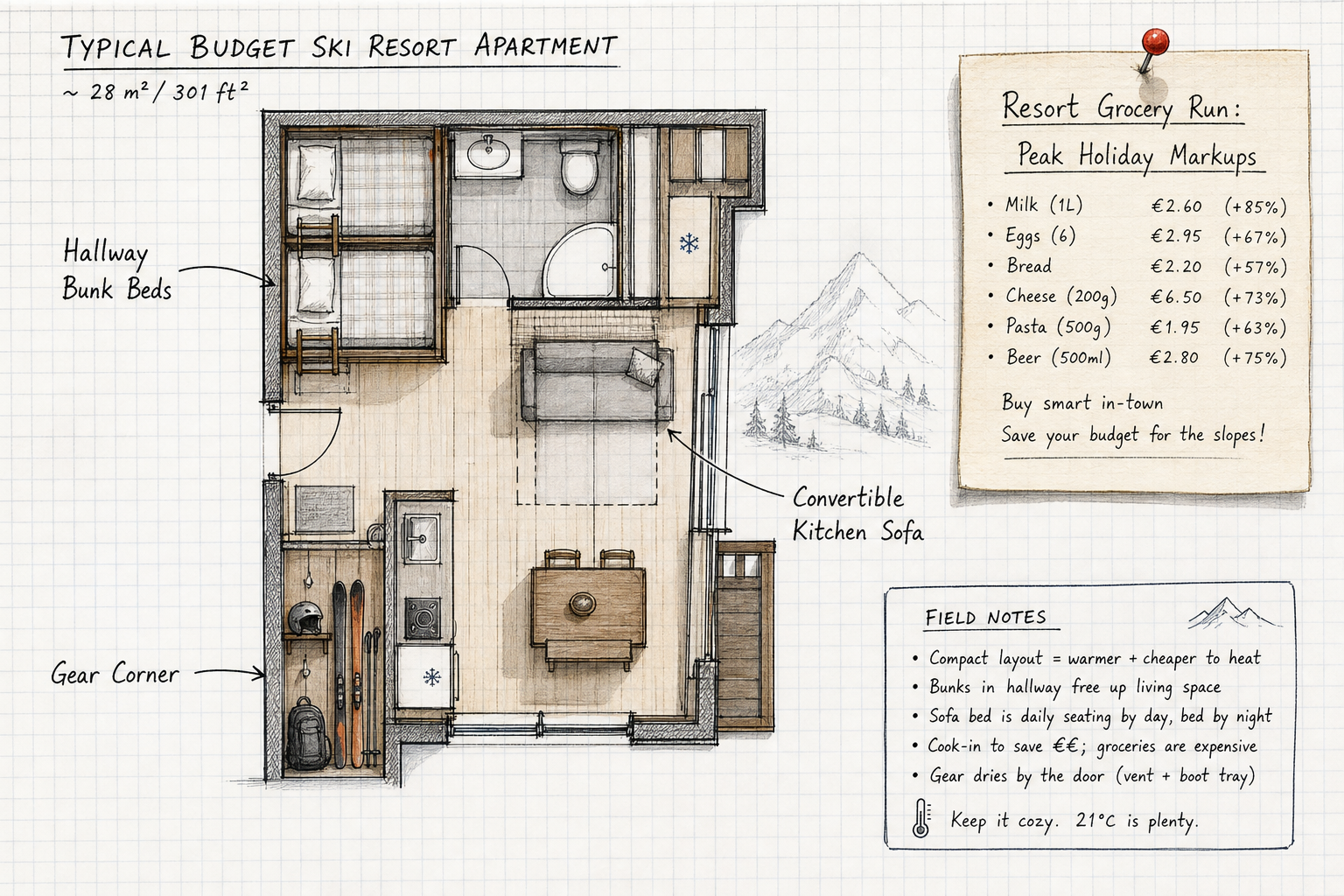
First, these budget apartments are notoriously cramped. The classic “budget French ski apartment” often features bunk beds in a hallway and a pull-out sofa in the kitchen serving as the primary living space.
Second, self-catering during the New Year week is a logistical headache. Because you are not eating at the hotel, you have to buy groceries. Resort supermarkets have massive markups, especially during the holidays. After a long day of skiing in freezing temperatures, you have to navigate crowded grocery aisles, cook your own meals, and clean up. Eating out at restaurants to avoid cooking will immediately destroy the budget you saved by booking a cheap apartment.
Finally, the aggregator model heavily penalizes solo travelers. Because apartments are priced for multi-person occupancy, a solo skier booking a SnowTrex apartment will almost always face a prohibitive single supplement, effectively doubling the cost of the trip.
Ski Hostel: The All-Inclusive Community Approach
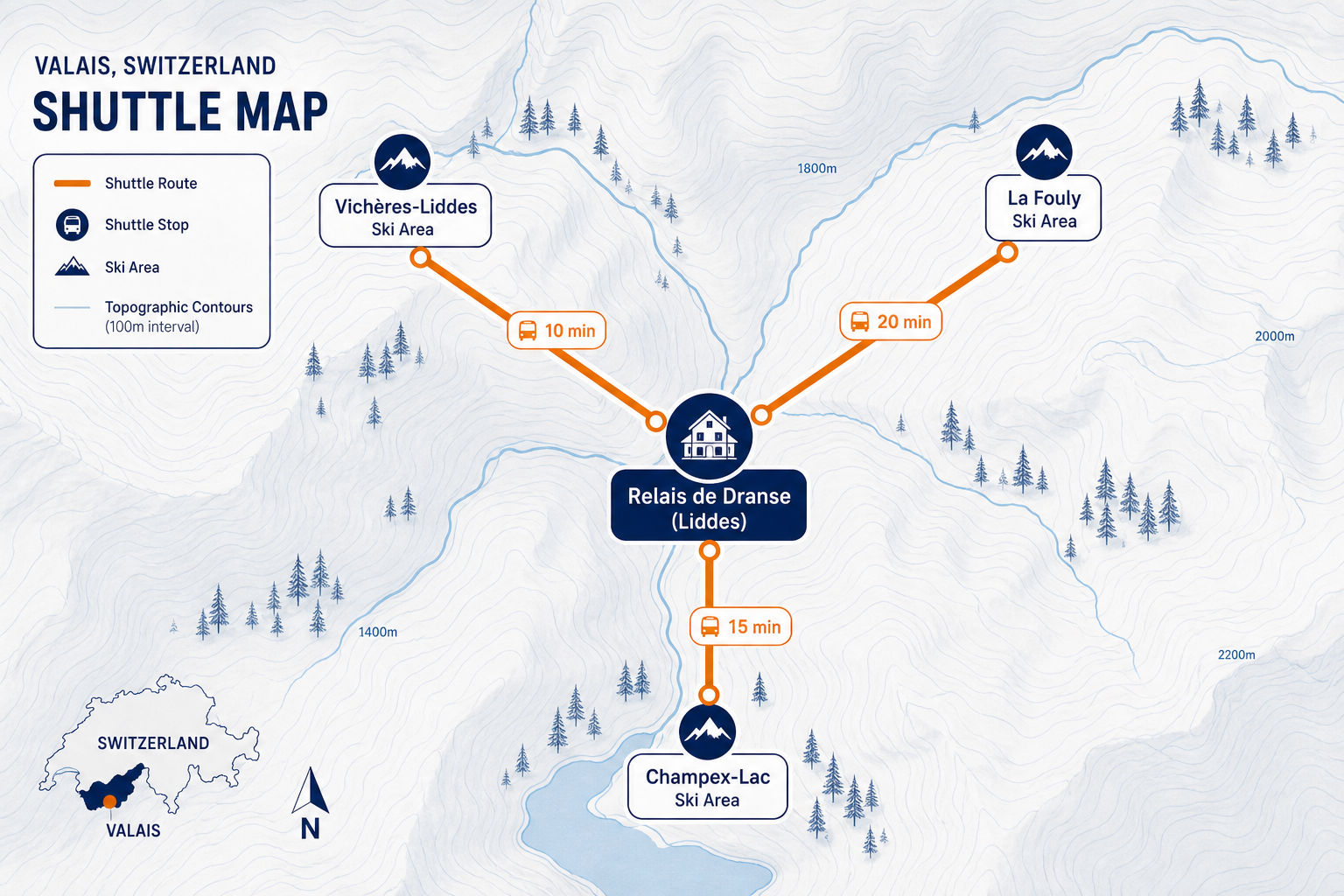
On the other end of the budget spectrum is the all-inclusive, niche-provider model. Ski Hostel operates on a very different philosophy, offering 6- or 7-night packages based out of the Relais de Dranse in Liddes, Switzerland.
Rather than acting as a middleman for hundreds of different resorts, Ski Hostel runs a controlled, community-focused operation in the Valais region. The packages bundle everything: hostel-style lodging, full-board dining, daily mountain shuttle transfers, and ski lift passes for three distinct nearby resorts (Vichères-Liddes, La Fouly, and Champex-Lac). Optional airport transfers from Geneva and equipment rentals can also be added.
How the Ski Hostel Model Works
The Ski Hostel approach solves the New Year pricing problem by operating just slightly off the beaten path and keeping all daily logistics in-house.
Instead of fighting for space in Verbier or Zermatt, the basecamp in Liddes offers access to high-quality, uncrowded Swiss Alps skiing. The inclusion of full-board dining completely eliminates the variable costs of holiday food pricing, which is crucial for budget control.
To understand how this lodging style differs from traditional independent backpacking, you can review the differences between ski hostel packages vs youth hostels in Valais.
The Advantages of Ski Hostel for New Year
- Absolute Cost Certainty: Because breakfast, a packed mountain lunch, and dinner are included, you do not have to worry about the exorbitant cost of mountain restaurants or resort supermarkets. You know exactly what your New Year week will cost before you even board your flight.
- Solo and Nomad Friendly: Unlike apartment rentals, hostel-style lodging allows you to pay purely for your own bed. There are no massive single supplements. The communal nature of the Relais de Dranse also provides a built-in social network, meaning solo travelers won’t be sitting alone on New Year’s Eve.
- Zero Holiday Crowds on the Mountain: Mega-resorts are chaotic between Christmas and New Year. Lift lines can exceed 40 minutes. The resorts included in the Ski Hostel pass (Vichères-Liddes, La Fouly, and Champex-Lac) are hidden gems. They offer excellent Swiss snow reliability and varied terrain without the crushing holiday crowds.
- No Logistical Friction: You don’t need a rental car, and you don’t have to figure out complex public transit. The daily mountain shuttles handle the transfers from the hostel directly to the lifts.
The Drawbacks and Considerations
The Ski Hostel model is specific, and it isn’t for everyone.
If you require private, luxury accommodations with en-suite spa facilities, hostel-style lodging is not the right fit. Furthermore, while Vichères-Liddes, La Fouly, and Champex-Lac offer fantastic skiing, they are not interconnected 400-kilometer mega-domains. If your primary goal is to ski a different valley every single hour for six days without ever taking off your skis, you might prefer a massive French domain, even with the associated crowds.
Head-to-Head Comparison: Booking a New Year Trip
To make the best decision for your holiday budget, you need to compare how these two models handle the day-to-day realities of a ski week.
1. Accommodation and Atmosphere
The vibe of your trip will be entirely dictated by your lodging choice.
With a SnowTrex apartment, you are generally isolated with your travel group. This is excellent for a family of four who wants private time in the evenings. However, for a solo traveler or a couple looking to meet people, an apartment in a massive concrete resort complex can feel incredibly lonely.
Ski Hostel thrives on community. It caters specifically to a demographic of winter sports enthusiasts who value shared experiences. The communal dining spaces and lounge areas mean you are constantly interacting with other skiers. If you are curious about who you might be sharing the mountain with, checking out the European ski hostel guest demographics and age range profile provides good insight into the typical mix of digital nomads, gap-year travelers, and budget-conscious professionals.
2. Dining and Daily Budgeting
Food is the silent budget killer of any ski holiday. During the New Year week, resort restaurants charge peak prices, and a simple burger and beer on the mountain can easily cost €30 to €40.
The Self-Catering Route (SnowTrex):
You have absolute control over what you eat, but you pay for it in time and effort. You must factor in the time spent grocery shopping, the inflated cost of resort groceries, and the exhaustion of cooking after skiing. If you forget to buy salt, oil, or coffee filters, you are making another trek to the overpriced mini-mart.
The Full-Board Route (Ski Hostel):
Every meal is handled. You wake up to breakfast, you are handed a packed lunch to take on the mountain (completely bypassing the €30 mountain burger), and you return to a hot dinner. This approach maximizes your time spent relaxing or skiing. If you are debating the value of having meals included, evaluating half board vs full board for an active ski holiday illustrates just how much money and time a packed lunch saves.
3. Ski Areas and Lift Passes
A budget trip usually means you are not staying ski-in/ski-out at the absolute center of a luxury resort. Both models handle this differently.
SnowTrex frequently places you in satellite villages. To reach the main ski area, you might need to rely on local ski buses. As noted by tourism boards, the morning commute on the ski bus can also be romanticised together: for example, with a shared playlist, a deck of cards or researching the best huts. While true, taking public ski buses during New Year week often means waiting in the freezing cold as two full buses drive past you before you can squeeze on.
Ski Hostel solves the commute by running its own dedicated mountain shuttles. You know exactly when you are leaving Relais de Dranse and when you are arriving at the lifts of Vichères-Liddes, La Fouly, or Champex-Lac. You aren’t fighting the general public for a seat on a municipal bus.
Summary Comparison Matrix
| Feature | SnowTrex (Typical Budget Package) | Ski Hostel (Liddes Package) |
|---|---|---|
| Target Audience | Families, groups filling an apartment | Solo travelers, digital nomads, couples |
| Pricing Model | Accommodation + Lift Pass | All-inclusive (Bed + Food + Pass + Shuttle) |
| Food Logistics | Self-catering (grocery shopping required) | Full board (Breakfast, packed lunch, dinner) |
| New Year Crowds | Heavy (massive integrated domains) | Light (hidden gem Swiss resorts) |
| Transport to Lifts | Public ski bus, walking, or personal car | Included daily private shuttle |
| Solo Traveler Cost | High (due to single apartment supplements) | Low (pay per bed in hostel setting) |
Myth-Busting: “Switzerland is Always Too Expensive”
One of the most persistent myths in winter sports is that France, Italy, or Austria are the only places for budget skiing, while Switzerland is strictly reserved for luxury travelers.
It is true that walking into a luxury watch shop in St. Moritz or ordering fondue on the main street of Zermatt on New Year’s Eve will be catastrophically expensive. However, the Swiss Alps are filled with localized, high-quality ski areas that operate completely outside the luxury tourist bubble.
The Valais region, where Ski Hostel is based, is a perfect example. Because the package bundles the essentials—using the purchasing power of the hostel to secure food and lift passes—the per-day cost of skiing in Switzerland drops dramatically. You get the world-class Swiss Alpine infrastructure, the dramatic high-altitude scenery, and reliable snowpack, all without paying the “Zermatt premium.”
The Hidden Costs to Watch Out For
Regardless of whether you choose an aggregator like SnowTrex or an all-inclusive package like Ski Hostel, you need to monitor a few variable costs that can sneak up on you during the New Year week:
- Airport Transfers: Getting from Geneva, Zurich, or Lyon to your resort can be shockingly expensive. Taxis cost hundreds of euros, and peak-week train tickets sell out. Ski Hostel offers optional airport transfers to mitigate this, whereas with an aggregator, you are usually entirely on your own to arrange last-mile transport.
- Equipment Rentals: Renting gear on the mountain during New Year’s week is both expensive and frustrating, as shops run out of common boot sizes. Adding rentals directly to a package is always cheaper. If you are considering buying versus renting, review what equipment to bring for a budget European ski trip to see where you can save by bringing your own gear.
- Après-Ski and Alcohol: A budget trip can turn into a premium trip very quickly if you spend €15 per drink at an umbrella bar every afternoon.
Scenario Analysis: The Solo Traveler vs. The Group of Four
To make the decision concrete, let’s look at how the math and the experience play out for different types of travelers looking to ski over the New Year holiday.
Scenario A: The Group of Four University Students
Four friends want to ski for New Year’s and have a tight budget. They don’t mind sleeping in bunk beds in a small room, and they are perfectly happy cooking massive pots of pasta every night to save money. They want to ski a massive French domain and hit the loud après-ski bars.
The Verdict: SnowTrex is the clear winner here. By splitting a four-person apartment, their per-person base cost will be incredibly low, and they have the manpower to handle the cooking and grocery logistics easily.
Scenario B: The Solo Digital Nomad or Couple
A remote worker (or a couple) wants to ski for New Year’s. They want to stick to a strict budget, but they absolutely refuse to spend their holiday grocery shopping and washing dishes in a cramped kitchenette. They want a social atmosphere for New Year’s Eve, reliable snow, and to avoid hour-long lift lines.
The Verdict: Ski Hostel is the better choice. The lack of a single supplement keeps the price low. The full-board dining removes the chore of cooking. The communal hostel environment guarantees they will have a fun, social New Year’s Eve with like-minded travelers, and the included shuttles make getting to the uncrowded Swiss lifts completely effortless.
Frequently Asked Questions
When should I book a New Year ski package?
Because the week between Christmas and New Year is the highest demand period of the season, you should ideally book by September or October. Budget packages on aggregators like SnowTrex sell out of the cheapest apartments first, leaving only premium options. Similarly, specialized operators like Ski Hostel have a fixed number of beds at Relais de Dranse, and once they are gone, they are gone.
What is the snow reliability like during the New Year week?
Late December can sometimes be tricky for snow cover in Europe. This makes choosing the right location vital. Resorts with high-altitude skiing or excellent snowmaking infrastructure are essential. The Swiss Valais region generally offers excellent early-season snow reliability compared to lower-altitude Austrian resorts.
Can I really ski the Swiss Alps on a budget?
Yes, provided you avoid piecemeal booking. If you book your accommodation, food, and lift passes separately, Switzerland is very expensive. If you book an all-inclusive package that covers your lodging, meals, and lift passes in a fixed upfront price, the cost becomes highly competitive with budget French or Italian options.
Making Your New Year Ski Decision
Finding an affordable New Year ski week doesn’t require magic, but it does require stepping away from the standard booking mindset. If you try to book a standard hotel in a famous mega-resort for December 28th, you will overpay.
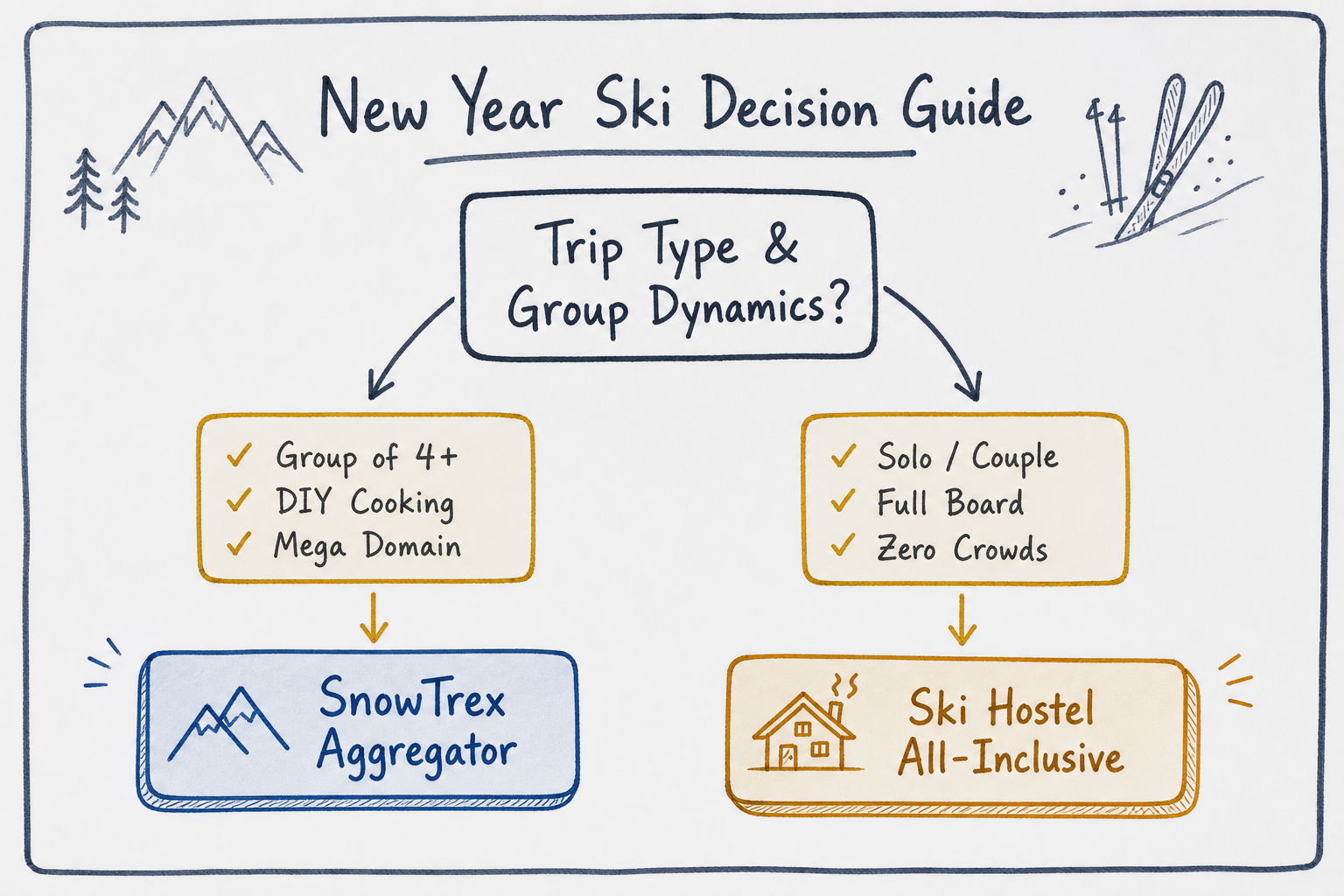
Your best path forward is choosing a model that protects you from peak-season variable costs. If you are traveling with a group of friends who are willing to cook, clean, and share a small apartment to access a massive French ski domain, SnowTrex offers unbeatable bulk-rate deals.
However, if you are a solo traveler, a digital nomad, or a budget-conscious skier who values their time—if you want to ski uncrowded Swiss snow, eat hot meals you didn’t have to cook, and spend New Year’s Eve in a vibrant community rather than an isolated apartment—Ski Hostel’s all-inclusive package at Relais de Dranse is the definitive way to experience the Alps without the premium price tag.