Ski hostel packages vs youth hostels in Valais
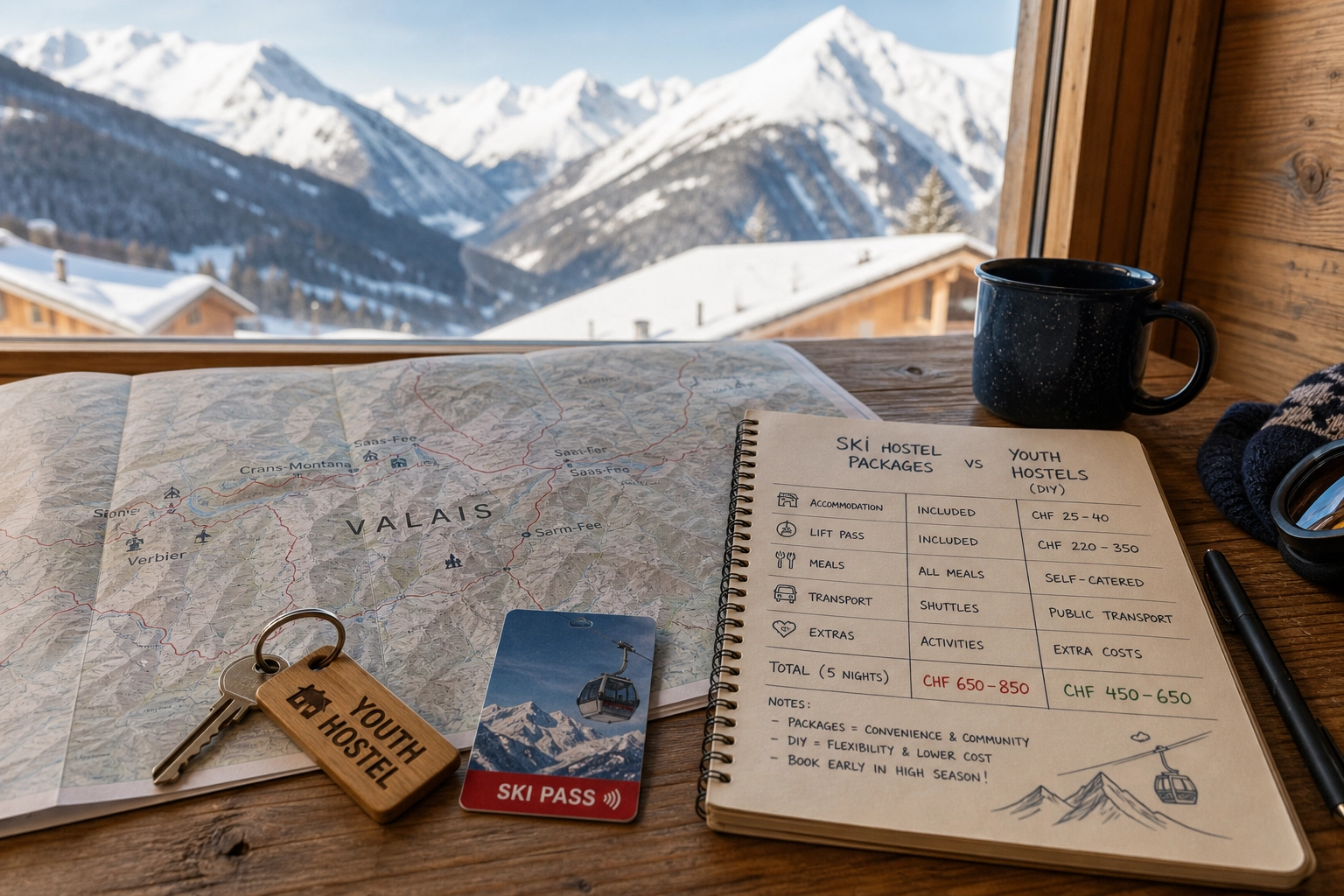
Planning a ski trip to the Swiss Alps often feels like navigating two extremes. On one side are five-star chalets and luxury resorts with four-figure nightly rates. On the other side is the DIY budget route: booking a dorm bed in a municipal or network youth hostel, buying individual day passes at ticket windows, navigating regional train and postbus connections with heavy gear, and cooking pasta in a shared kitchen every evening.
For decades, the standard youth hostel was the only realistic way for budget-conscious skiers, solo travelers, and students to access the Swiss canton of Valais. However, specialized ski hostel packages have emerged as an alternative model. Instead of treating lodging as a bare-bones bed with optional extras, specialized ski hostels bundle lodging, multi-resort lift passes, daily mountain shuttles, and full-board meals into structured weekly stays.
Choosing between a standard Swiss Youth Hostel and an all-inclusive ski hostel package in Valais comes down to how you balance total trip cost, daily logistics, mountain variety, and social atmosphere.
Understanding the Two Models
To evaluate which option suits your trip, you need to understand how each accommodation style operates within the Swiss winter tourism infrastructure.
Traditional Swiss Youth Hostels (The Modular, Bed-First Model)
The Swiss Youth Hostels association (Schweizer Jugendherbergen) operates well-maintained, standardized properties across Switzerland. In Valais, network hostels and independent municipal lodges can be found in destinations like Zermatt, Crans-Montana, and Saas-Fee.
These properties operate on an à la carte hospitality structure:
- Base booking: You pay primarily for a dorm bed or private room, which standardly includes a basic continental breakfast buffet.
- Meals: Lunch is your own responsibility. Dinner is either prepared in a guest kitchen (where permitted) or purchased as a set three-course buffet dinner.
- Ski logistics: Lift tickets, gear hire, and transit between the hostel and the mountain stations are planned, booked, and paid for separately by the guest.
- Guest demographic: A broad mix of school groups, family vacationers, international backpackers, hikers, and occasional skiers.
Specialized Ski Hostel Packages (The Structured, All-Inclusive Model)
Specialized ski hostels are built entirely around the skier and snowboarder routine. Rather than selling unbundled room nights, these operations sell fixed-length packages (typically 6-night or 7-night stays) that package every operational component of a winter holiday into a single rate.
At base lodges such as Relais de Dranse in Liddes (situated in the Pays du Saint-Bernard region of Valais), a standard ski package bundles:
- Accommodation: Dormitory or private room lodging for the duration of the week.
- Ski Lift Passes: Multi-day lift tickets covering regional ski areas such as Vichères-Liddes, La Fouly, and Champex-Lac.
- Slope Transportation: Scheduled daily private transfers directly to and from the mountain lifts.
- Full-Board Dining: Daily breakfasts, packed trail lunches or mountain lunch setups, and communal evening dinners.
- Community Focus: Shared spaces geared toward winter sports enthusiasts, solo travelers, and remote workers needing reliable desks and fast internet.
Cost Breakdown: The Hidden Line Items of DIY Skiing
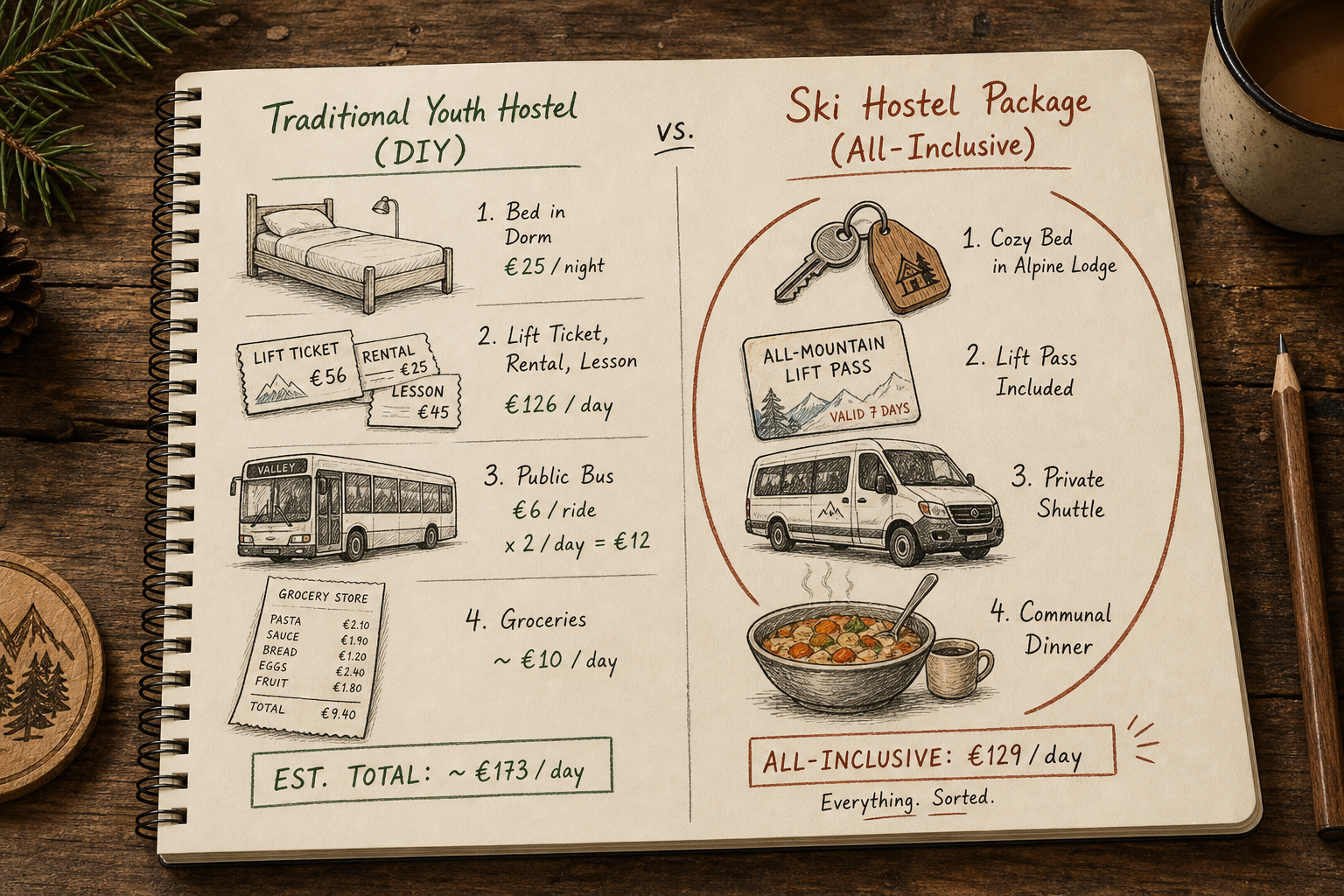
At first glance, a CHF 45 to CHF 65 per night dorm bed at a standard youth hostel appears significantly cheaper than a package costing CHF 850 to CHF 1,000 for a week. However, lodging represents only a fraction of the total expense when skiing in Switzerland.
When you purchase each element independently, small daily expenses accumulate rapidly.
The Real Cost of an À La Carte Youth Hostel Trip (7 Nights)
When staying at an unbundled youth hostel in a major Valais valley, your typical budget over seven days looks like this:
| Expense Category | Typical Daily Cost (CHF) | 7-Day Total (CHF) |
|---|---|---|
| Hostel Dorm Bed + Breakfast | CHF 55 | CHF 385 |
| Lift Pass (Single Major Resort or Regional) | CHF 75 – CHF 95 | CHF 450 – CHF 570 |
| Mountain Lunch / Cafe Meal | CHF 22 – CHF 30 | CHF 154 – CHF 210 |
| Hostel Dinner or Budget Restaurant | CHF 25 – CHF 40 | CHF 175 – CHF 280 |
| Local Ski Bus / Train Transit | CHF 8 – CHF 16 | CHF 48 – CHF 96 |
| Ski Locker / Station Storage | CHF 5 – CHF 10 | CHF 30 – CHF 60 |
| Estimated Total | — | CHF 1,242 – CHF 1,601 |
Even with disciplined supermarket shopping at Coop or Migros to cook basic dinners, an unbundled ski trip in Valais rarely stays below CHF 1,100 once full-price lift tickets are factored in.
The Specialized Ski Hostel Package Cost (7 Nights)
Specialized ski packages negotiate group volume rates across lift access, accommodation, and catering. At operations like Ski Hostel based at Relais de Dranse in Liddes, a comprehensive 6- or 7-night winter package generally starts between CHF 850 and CHF 950.
Because this base rate covers:
- All 7 nights of lodging
- 6 full days of lift passes across three resorts (Vichères, La Fouly, Champex-Lac)
- Full-board catering (breakfast, packed lunch, communal hot dinner)
- Direct private shuttle transfers to the lifts
Your out-of-pocket variable expenses are limited to personal beverages, rental equipment, travel to the base village, and après-ski snacks. The total financial outlay remains predictable before you step on the plane or train.
Daily Logistics: Public Transit vs. Dedicated Mountain Shuttles
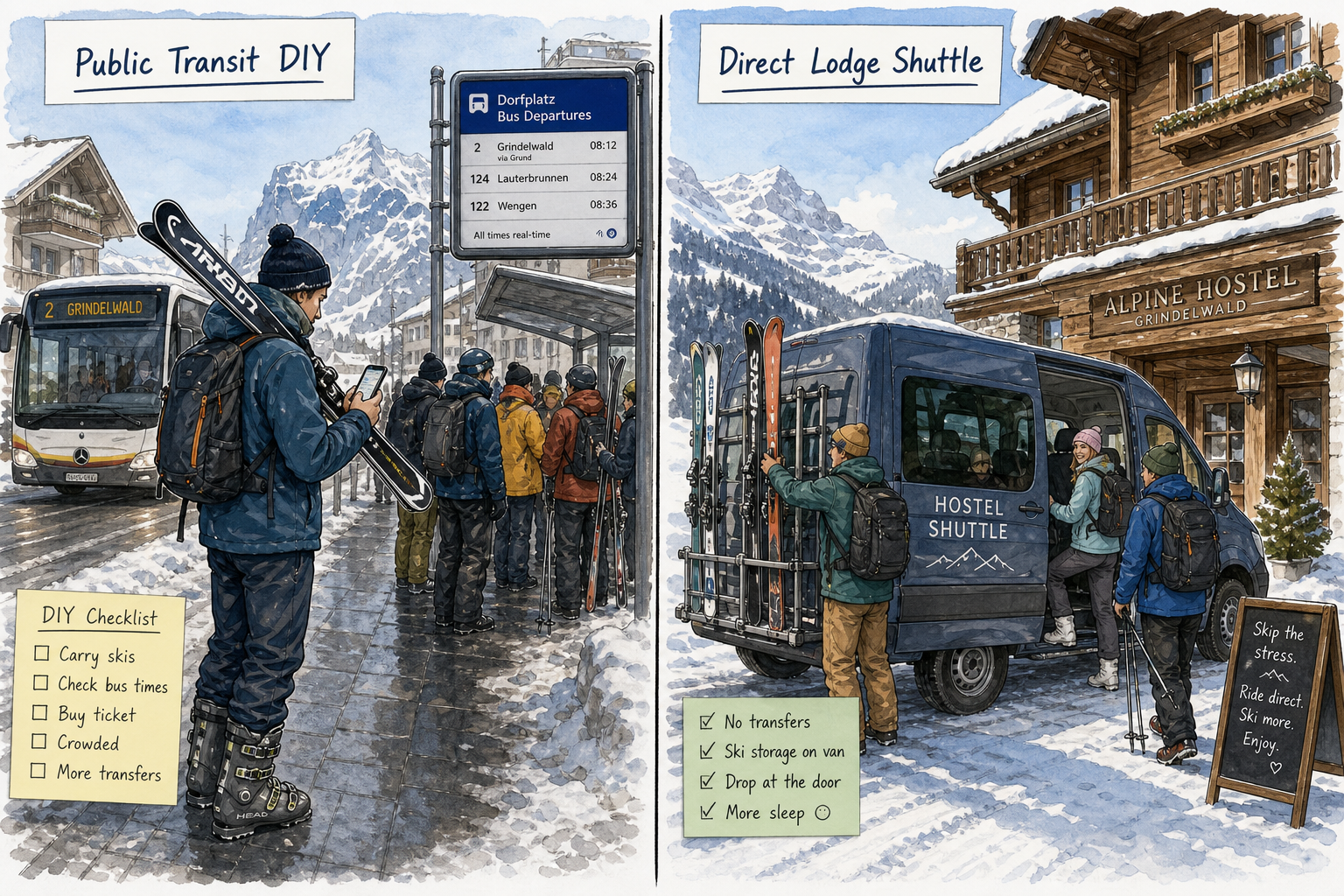
Logistical friction is one of the most underappreciated aspects of a ski trip. Carrying heavy skis, poles, and boots through train stations and public bus stops twice a day impacts how much time and energy you spend on the mountain.
Navigating Valais via Public Transit from a Youth Hostel
Valais has an extensive public transportation network operated by SBB trains and regional PostBus routes. Most traditional youth hostels are situated near a train station or bus hub.
However, using public transit for daily skiing presents specific challenges:
- Fixed Timetables: Regional PostBuses to smaller powder spots or side valleys often run on 30-minute or 60-minute intervals. Missing a bus can cost an hour of slope time.
- Crowds and Gear Handling: Morning ski buses during peak season (January through March) are crowded with local commuters, school children, and other tourists.
- Station Walks in Ski Boots: Walking several hundred meters on icy sidewalks between the bus stop and the hostel with heavy equipment adds fatigue at the start and end of every day.
Dedicated Shuttles in Ski Hostel Packages
In a package-based ski hostel, slope transport is integrated into the daily house schedule.
- Door-to-Lift Transit: Guests load their gear directly into private vans or minibuses parked at the hostel door after breakfast.
- Direct Mountain Access: Drivers drop guests directly at the lift base of the resort selected for that day’s conditions (for instance, choosing Vichères on a clear sunny morning or the sheltered tree runs of La Fouly on a storm day).
- Synchronized Pickups: The shuttle returns at a designated après-ski time, eliminating the need to wait in cold bus shelters or manage transit passes.
Mountain Variety: Single Mega-Resorts vs. Multi-Resort Hidden Gems
Where you stay determines which terrain you ski. Traditional youth hostels and specialized packages in Valais target fundamentally different mountain experiences.
The Big-Name Mega-Resorts (Standard Youth Hostel Terrain)
Youth hostels in Valais are frequently positioned in world-famous resort towns like Zermatt (Matterhorn Glacier Paradise), Crans-Montana, or the Saas Valley.
The Advantages:
- Massive linked terrain covering over 100 to 300 kilometers of marked pistes.
- Modern, high-speed 8-seater chairlifts and large cable cars.
- Extensive high-alpine infrastructure, terrain parks, and glacier skiing.
The Tradeoffs:
- Crowds and Lift Lines: Lift lines at major base stations can back up significantly on powder mornings and weekend peak periods.
- Tracked-Out Snow: Off-piste lines and sidecountry powder stashes are tracked out within hours of the lifts opening.
- Commercialized Atmosphere: Mega-resort base villages are dominated by luxury boutiques, expensive restaurants, and commercial hospitality chains.
The Hidden Gems of Pays du Saint-Bernard (Ski Hostel Package Terrain)
Specialized packages based in the Dranse Valley (Liddes) leverage access to three distinct, uncrowded resorts located within a 15- to 25-minute drive: Vichères-Liddes, La Fouly, and Champex-Lac.
- Vichères-Liddes: Situated on the slopes of the Bavon, Vichères offers open alpine bowls, wide carving pistes, and expansive freeride terrain overlooking the Grand Saint-Bernard pass. Because it draws primarily locals and regional clubs, lift queues are virtually nonexistent even on weekends.
- La Fouly: Located at the foot of the Mont Dolent and the Tour Noir, La Fouly is renowned for exceptional snow accumulation. Its forested slopes provide protected tree skiing when visibility drops at higher altitudes.
- Champex-Lac: Known as “Little Canada,” Champex-Lac surrounds an alpine lake and offers steep, north-facing cruisers through dense pine forests that hold cold powder for days after a storm.
Skiing these three resorts over a single week provides variety without the friction of commercial mega-resorts. You spend your day making continuous laps rather than waiting in lift lines.
Social Dynamic: Solo Travelers, Digital Nomads, and Group Vibe
The social fabric of your lodging dictates your evening experience. Both youth hostels and specialized ski hostels offer shared rooms, but their guest profiles and communal atmospheres differ considerably.
The Swiss Youth Hostel Demographic: Broad and Independent
Because Swiss Youth Hostels cater to all categories of budget travelers, the common rooms host a wide spectrum of guests:
- Families with young children eating early dinners.
- High school or university field trip groups.
- Weekend tourists sightseeing without winter sports gear.
- Independent backpackers on multi-city European tours.
While these hostels are clean and comfortable, the broad demographic means the evening atmosphere is often quiet or fragmented. Guests tend to keep to their own travel parties, and spontaneous group ski sessions are rare.
The Ski Hostel Demographic: Shared Purpose and Mountain Culture
A specialized ski hostel brings together people with a shared focus: spending the winter on snow.
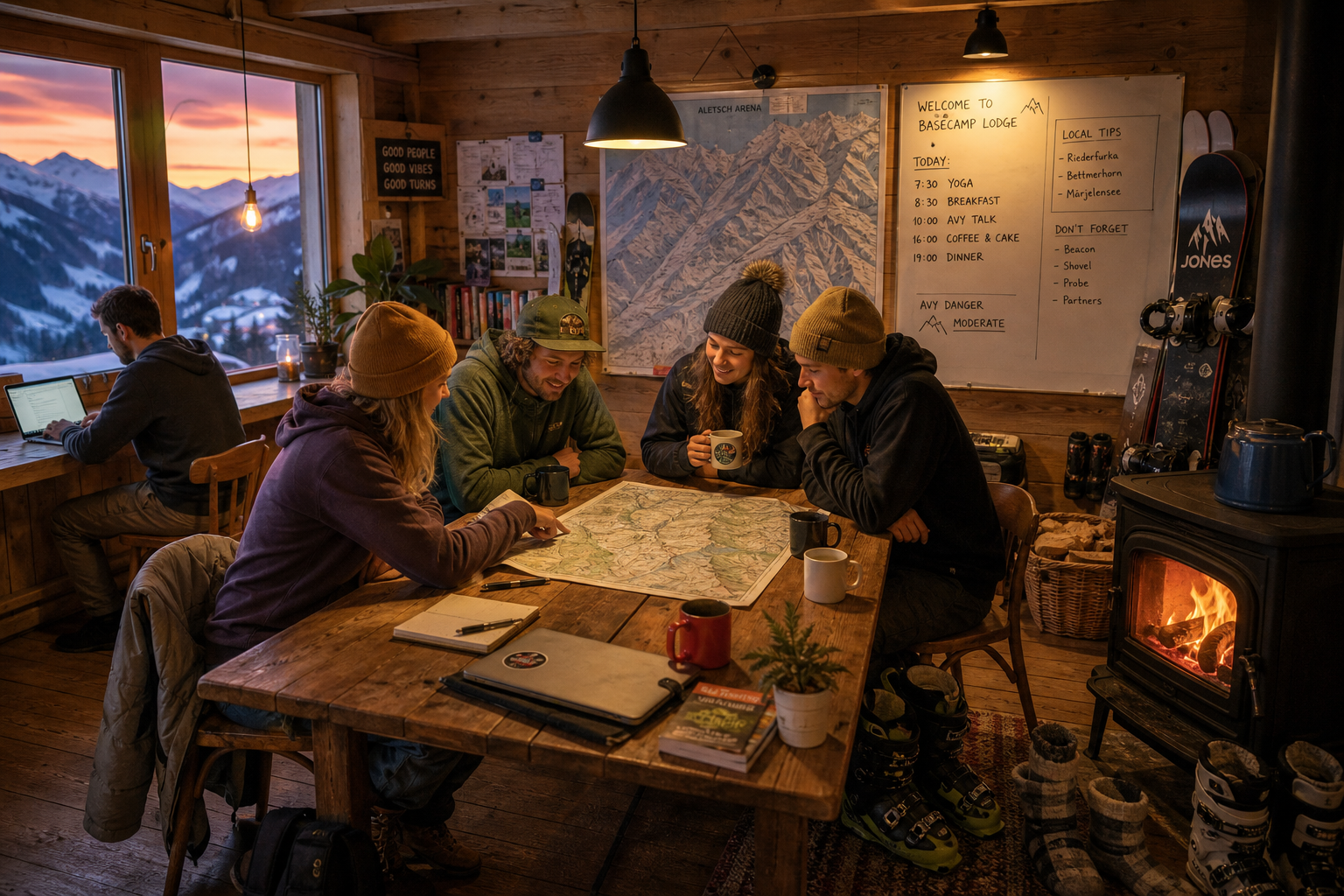
- Solo Traveler Integration: Solo skiers and snowboarders naturally connect over breakfast, coordinate laps on the mountain, and share tables at dinner. You do not need to search for riding partners; the entire lodge shares your schedule.
- Digital Nomad Infrastructure: With the rise of remote work, packages at lodges like Relais de Dranse are designed with work desks, high-speed Wi-Fi, and quiet corners for daytime laptop work before or after mid-day ski sessions.
- Structured Community Evenings: Communal family-style dinners encourage conversation. Common rooms feature board games, gear-tuning workbenches, and shared video reviews rather than quiet, transactional hostel lobbies.
Dining and Nutrition: Self-Catering vs. Skier Full-Board
Skiing burns between 2,500 and 4,000 calories a day depending on intensity, temperature, and elevation. How you fuel your body impacts your energy levels over a consecutive 6-day ski trip.
The Reality of Cooking in a Youth Hostel Kitchen
Many budget travelers plan to save money by cooking dinner in youth hostel communal kitchens. While practical in theory, the day-to-day reality after seven hours on the slopes can be exhausting:
- Grocery Runs: You must carry groceries back from the village supermarket in sub-zero temperatures while wearing winter layers.
- Crowded Stoves: During peak dinner hours (18:30 to 20:30), hostel kitchens often have limited open burners, scarce pots, and crowded prep counters.
- Repetitive Meals: To minimize cooking time, most guests default to simple pasta, jarred sauce, and processed snacks that lack the protein and balance needed for muscle recovery.
- Mountain Lunch Costs: Buying a basic hot meal (rosti, soup, or a burger) at an on-mountain restaurant costs CHF 22 to CHF 35 per day, quickly canceling out any dinner savings.
The Full-Board Package Approach
In a full-board ski hostel setup, dining is calibrated specifically for mountain athletes:
- Hearty Breakfasts: High-protein options, porridge, muesli, fresh bread, and hot coffee ready before the morning shuttle departure.
- Packed Trail Lunches: Guests pack lunches at breakfast (sandwiches, fruit, energy bars, and hot tea thermoses), avoiding expensive mountain chalets and maximizing slope time.
- Communal Hot Dinners: Wholesome, balanced evening meals—such as regional stews, pastas, curry bowls, and traditional Valais dishes—served family-style without prep or cleanup duties.
Side-by-Side Comparison: Ski Hostel Package vs. Swiss Youth Hostel
The following table summarizes how specialized ski hostel packages compare against standard youth hostels across critical vacation criteria in the Valais Alps.
| Factor | Specialized Ski Hostel Package (e.g., Ski Hostel / Relais de Dranse) | Traditional Swiss Youth Hostel (e.g., Zermatt / Saas-Fee) |
|---|---|---|
| Pricing Model | All-inclusive bundle (Lodging + Pass + Food + Transport) | À la carte (Bed only; add-ons for food, passes, transit) |
| Average 7-Day Total | CHF 850 – CHF 1,000 (Predictable, fixed) | CHF 1,200 – CHF 1,650+ (Variable, hidden costs) |
| Lift Passes | Included (Covers Vichères, La Fouly, Champex-Lac) | Purchased separately at daily window or dynamic rates |
| Slope Transport | Private door-to-lift shuttle included | Public PostBus / Train (requires walking & timetables) |
| Meal Inclusion | Full-board: Breakfast, packed lunch, communal dinner | Breakfast included; self-cooking or paid set buffet |
| Crowd Levels | Low to moderate (uncongested local valley resorts) | High to very high (major international resorts) |
| Social Focus | Skiers, snowboarders, solo riders, digital nomads | Mixed: Families, school groups, general tourists |
| Trip Planning Friction | Minimal (single booking covers all operational needs) | High (multiple platforms for beds, passes, schedules) |
When to Choose a Traditional Swiss Youth Hostel
A specialized package is not ideal for every traveler. There are specific scenarios where booking an unbundled Swiss Youth Hostel is the better strategic choice:
- You want to ski only iconic mega-resorts: If your primary goal is checking the Matterhorn Glacier Paradise or the 4 Vallées off your bucket list, staying at a hostel directly inside Zermatt, Verbier, or Crans-Montana gives you immediate base access to those specific terrain networks.
- You ski only 1 or 2 days during a week-long stay: If your trip focuses primarily on snowshoeing, winter hiking, visiting thermal spas, or working remotely with only an occasional day on the slopes, paying for a bundled multi-day lift ticket package makes less financial sense.
- You have free rail passes (Swiss Travel Pass / GA): If you already hold an unlimited Swiss transit pass, the cost of regional PostBuses and trains is already amortized, making public transit logistics more economical.
- You travel with non-skiing companions: If members of your travel party do not ski or snowboard, traditional resort towns offer more pedestrian-oriented non-ski infrastructure, such as luxury boutiques, museums, and village ice rinks.
When to Choose a Specialized Ski Hostel Package
Opting for an all-inclusive ski hostel package at a base lodge like Relais de Dranse in Liddes is the superior choice if:
- You are a solo traveler or digital nomad: You want an instant, built-in community of fellow winter sports lovers to ride with by day and socialize with by evening, along with reliable work spaces.
- You want maximum value with no budget surprises: You prefer paying one transparent price that covers your room, lift tickets, transport, and meals, shielding your wallet from Swiss Franc sticker shock.
- You prioritize fresh snow and empty slopes over resort glitz: You would rather make uninterrupted powder runs in scenic alpine bowls like Vichères and La Fouly than wait in 20-minute lift lines at crowded mega-resorts.
- You want zero logistical stress: You prefer having your lift passes handed to you at check-in, your transport parked outside the door, and your meals prepared after a long day on the mountain.
A Typical Week at Ski Hostel (Relais de Dranse, Liddes)
To visualize how a package week operates, consider the typical flow of a 7-night winter stay in the Pays du Saint-Bernard:
Day-by-Day Experience:
- Saturday (Arrival): Check-in at Relais de Dranse in Liddes. Meet fellow guests, collect your lift pass, set up your ski locker, and enjoy an evening welcome dinner.
- Sunday – Monday (Vichères-Liddes): Warm up your legs on the wide carving runs of Vichères. Ride the chairlift to the upper bowls and take in panoramic views of the Mont Blanc massif and Saint-Bernard pass.
- Tuesday (La Fouly Deep Snow Day): Head to the end of the Val Ferret. Explore protected tree runs and deep powder fields beneath soaring glacial peaks.
- Wednesday (Champex-Lac Scenic Day): Ski the north-facing pistes of Champex-Lac, followed by a short walk along the frozen alpine lake before the afternoon shuttle return.
- Thursday – Friday (Conditions Choice): The shuttle driver and house team target the resort with the best current snow conditions or groomers based on group preferences.
- Saturday (Departure): Final breakfast, checkout, and easy departure via the local bus link to the Martigny train hub.
How to Book a Ski Hostel Week Package at Relais de Dranse
Booking a bundled week in Liddes is straightforward and eliminates managing multiple separate vendor reservations.
Step 1: Check Availability and Select Your Week
Visit the official booking portal at Ski Hostel. Packages typically run from Saturday to Saturday (7 nights) or Sunday to Saturday (6 nights) throughout the core winter season from December through April. Specialized holiday weeks (Christmas, New Year’s, and Spring Break) fill up quickly and should be reserved several months in advance.
Step 2: Choose Your Room Category
Select the lodging layout that fits your travel style and budget:
- Shared Dormitories: Ideal for solo travelers, budget backpackers, and digital nomads seeking maximum affordability and social connection.
- Private / Twin Rooms: Suited for couples, close friends, or travelers who want community access while maintaining personal privacy and quiet sleeping quarters.
Step 3: Select Optional Add-Ons
During checkout, you can customize your package with optional services:
- Ski / Snowboard Equipment Hire: Pre-arrange rental gear suited to your skill level, ready for pickup without hunting for local ski shops.
- Geneva Airport Transfers: Book direct airport shuttle transfers to avoid regional train connections with heavy ski luggage.
Step 4: Prepare Your Arrival
Once confirmed, you will receive arrival guidance detailing train connections to the Liddes valley stop (a short distance below the village) or driving instructions via the Grand Saint-Bernard route. Lift passes and meal schedules are arranged before you arrive, allowing you to settle in immediately.
Frequently Asked Questions
Should I stay at Swiss Youth Hostels or book a specialized Ski Hostel package in Valais?
If you want to ski famous mega-resorts like Zermatt or Verbier, travel with non-skiers, or plan to ski only 1 or 2 days, booking an unbundled Swiss Youth Hostel is often the better route.
If your goal is skiing 5 to 6 full days, keeping total trip costs predictable, avoiding crowds, and meeting other riders in an easy social atmosphere, a specialized ski hostel package at Relais de Dranse offers substantially better value and convenience.
Are the ski resorts in the Ski Hostel package suitable for advanced skiers?
Yes. While Vichères-Liddes, La Fouly, and Champex-Lac are smaller in total piste kilometers than commercial mega-resorts, they offer steep vertical drops, wide ungroomed powder bowls, and exceptional freeride sidecountry terrain. Because these resorts see low skier traffic, fresh powder stashes remain untouched for days after a storm, unlike major commercial resorts where off-piste lines disappear within an hour.
How do I get to Relais de Dranse in Liddes by public transport?
Liddes is easily accessible via the Swiss Federal Railway (SBB) network. Take the main line train to Martigny, transfer to the regional Saint-Bernard Express train to Sembrancher or Orsières, and catch the connecting regional PostBus directly to the Liddes stop, which is located a short walk from the lodge. Direct airport shuttle options are also available during package checkout.
Is high-speed internet available for remote workers and digital nomads?
Yes. Unlike traditional hostels where Wi-Fi is often restricted to the main lobby, specialized lodges like Relais de Dranse maintain high-speed Wi-Fi coverage across bedrooms and common work areas, accommodating video calls and remote work schedules throughout the winter season.