How to plan an affordable ski trip in the Swiss Alps
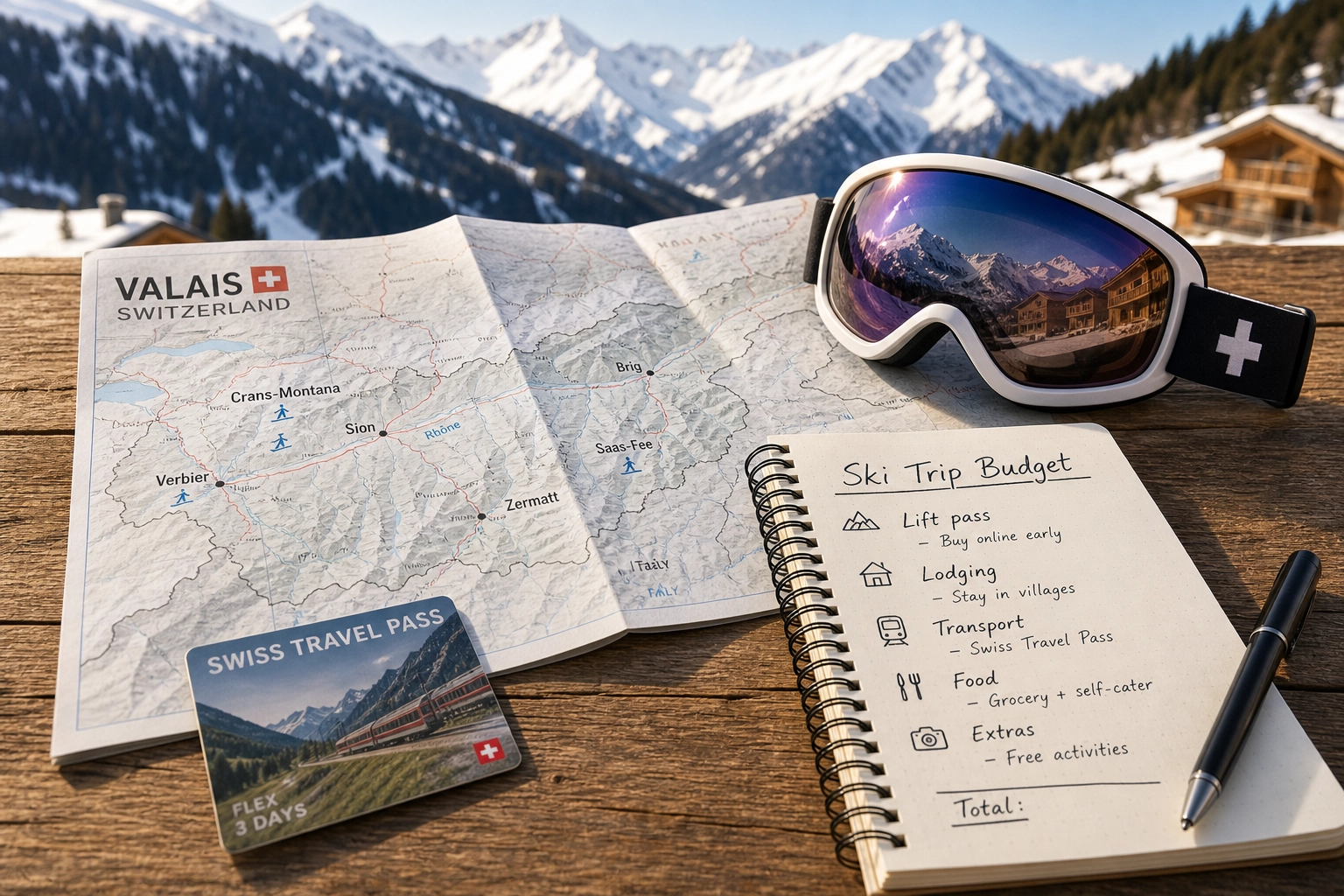
A week of skiing in Switzerland carries a reputation for draining bank accounts. If you browse luxury ski travel forums or look at five-star chalets in Zermatt, St. Moritz, or Verbier, it is easy to assume that a Swiss winter vacation requires thousands of Swiss Francs per person. Day passes at marquee mega-resorts routinely cross 85 to 100 CHF, slope-side lunches often set you back 40 CHF for a simple burger and drink, and slope-adjacent hotel rooms can easily top 400 CHF per night.
The idea that the Swiss Alps are strictly reserved for luxury travelers is fundamentally flawed.
Switzerland is home to hundreds of ski areas, ranging from sprawling international domains to quiet, high-elevation valley resorts that offer pristine powder, dramatic mountain views, and quiet lift lines at a fraction of the cost. When you avoid the mega-resort marketing machine and plan strategically around regional mountains, communal lodging, smart transit, and bundled packages, a Swiss ski holiday can cost less than a week at a mainstream North American or French resort.
Planning an affordable ski holiday in the Swiss Alps requires understanding where your money actually goes, choosing the right mountain valleys, and using local infrastructure to bypass unnecessary markups.
The Real Cost Breakdown of a Swiss Ski Trip
To cut your expenses effectively, you have to dissect where typical ski budgets fail. Most travelers lose money not because Switzerland itself is unmanageable, but because they purchase four distinct services piecemeal at premium consumer rates:
- Peak-Season Mountain Lodging: Booking slope-side private hotel rooms in brand-name villages carries a heavy premium.
- Individual Daily Lift Passes: Purchasing single-day passes directly at resort ticket windows or through dynamic pricing platforms during peak holidays.
- On-Mountain Dining: Eating three sit-down restaurant meals daily in tourist-heavy ski zones where import logistics and location inflate food prices.
- Uncoordinated Transit and Rentals: Paying full-fare train tickets, booking expensive private taxis from airports, and renting standard gear at base-station shops with captive pricing.
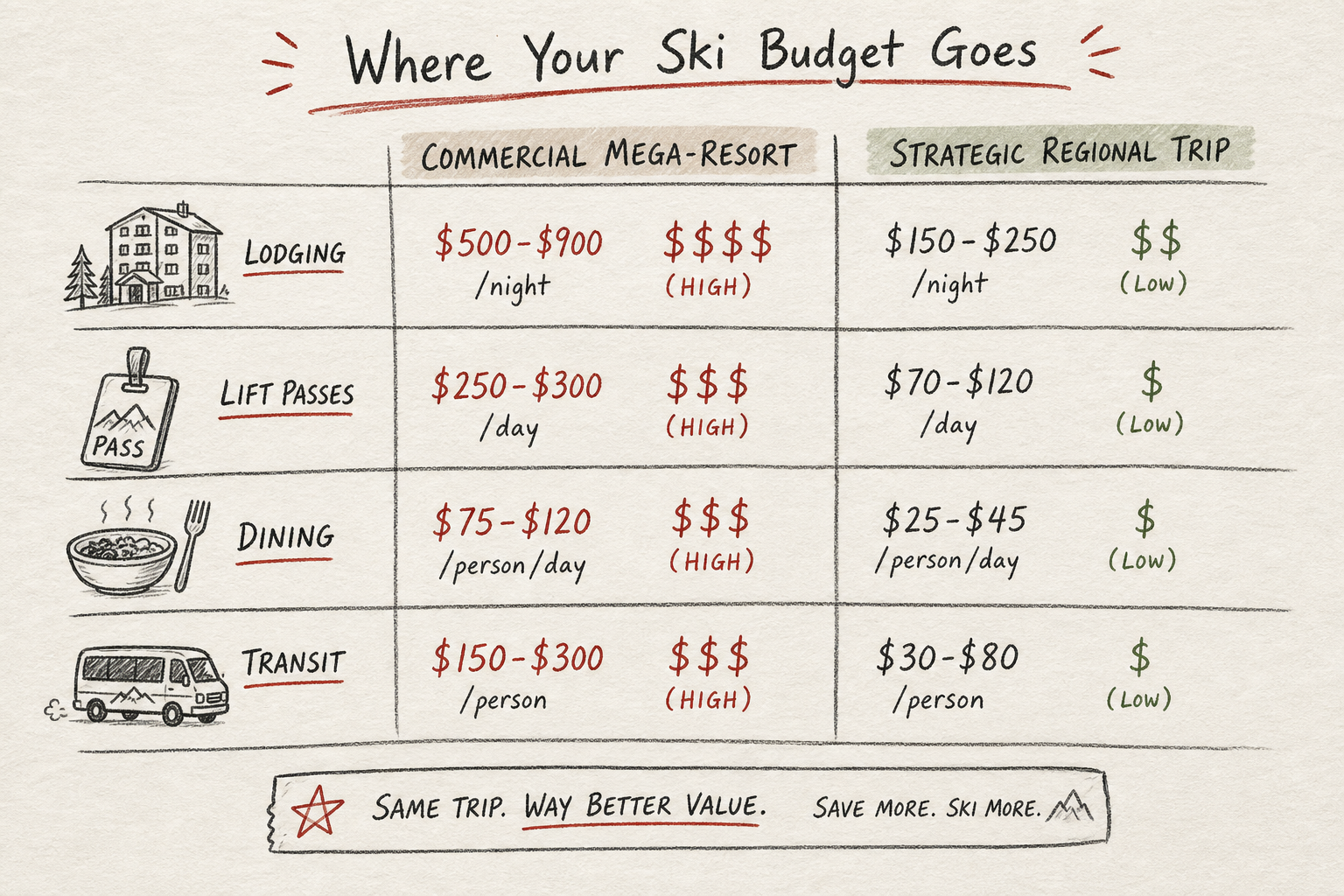
When bought individually at famous resorts, these four components quickly push the cost of a six-night holiday above 2,000 CHF per person before flights.
By contrast, an optimized budget approach attacks each line item directly:
- Lift passes: Swapping 90 CHF day tickets for 30 to 45 CHF regional tickets or multi-resort valley passes.
- Lodging: Choosing communal ski hostels, coliving lodges, or valley accommodations.
- Food: Utilizing full-board meal arrangements, communal kitchen cooking, or local supermarket staples.
- Logistics: Bundling transfers and mountain shuttles or taking advantage of integrated Swiss public transport passes.
Understanding this division allows you to choose an operational model that matches your travel style without sacrificing vertical drop or snow quality.
Skip the Mega-Resorts: Discovering Regional Swiss Gems
The single most impactful decision in planning a budget-friendly Swiss ski trip is choosing regional valleys over global brand-name resorts.
Many international visitors default to the same five destinations: Zermatt, Verbier, St. Moritz, Davos, and Grindelwald. These areas deliver massive interconnected terrain, but they also carry inflated prices for lodging, food, and lift access. In reality, a recreational skier or snowboarder rarely covers more than 30 to 40 kilometers of piste in a single day. Paying for access to 400 kilometers of terrain you will not use is one of the easiest ways to overspend.
Hidden throughout the Valais and surrounding cantons are regional resorts known locally as the quieter, authentic heart of Swiss winter sports—often dubbed “little Switzerland” ski areas for their preserved alpine charm, uncrowded pistes, and traditional village atmosphere.
+-----------------------------------------------------------------------------+
| MEGA-RESORTS vs REGIONAL RESORTS: DAILY COST SNAPSHOT                       |
+-----------------------------------------------------------------------------+
| Category               | Mega-Resorts (Zermatt/Verbier) | Regional Valais   |
| Lift Pass (1 Day)      | 85 - 105 CHF                   | 35 - 52 CHF       |
| Pint of Beer (Piste)   | 9 - 13 CHF                     | 5 - 7 CHF         |
| Mountain Lunch         | 30 - 45 CHF                    | 15 - 22 CHF       |
| Dorm/Budget Bed        | 90 - 160 CHF                   | 45 - 75 CHF       |
| Lift Queue Wait Times  | 10 - 25 mins (peak)            | 0 - 3 mins        |

+-----------------------------------------------------------------------------+
Travelers sharing their experiences on Reddit’s skiing community frequently highlight that stepping away from high-profile names transforms both the budget and the overall on-snow experience.
Top Budget-Friendly Valais Destinations
The Valais canton receives exceptional sunshine and high-altitude snowfall, making its smaller valleys prime territory for budget travelers. Three standout examples in the Pays du St-Bernard region include:
Vichères-Liddes
Perched on the flanks of the Grand-St-Bernard pass route, Vichères-Liddes offers wide, sweeping slopes facing the Entremont valley. With terrain reaching up to 2,267 meters, it provides wide-open freeride terrain, pristine grooming, and zero commercial clutter. Lift lines are virtually nonexistent on weekdays, and day tickets are a fraction of the cost of nearby 4 Vallées.
La Fouly
Located at the foot of Mont Dolent and the Tour du Mont Blanc route, La Fouly is a high-alpine paradise known for dramatic glacier views and consistent powder. It offers steep tree runs, quiet groomed pistes, and dedicated cross-country tracks, making it a favorite for powder chasers who prefer uncrowded slopes over commercial resort hype.
Champex-Lac
Often called “Little Canada” because of its alpine lake surrounded by traditional wooden chalets and pine forests, Champex-Lac offers scenic cruising runs, north-facing slopes that hold cold powder well into spring, and accessible touring routes.
Travel blogs such as Red White Adventures and Travels of Sarah Fay note that these regional gems provide authentic Swiss mountain culture while keeping daily mountain spending exceptionally low.
Accommodation: Hostels, Valley Bases, and Coliving
Lodging is typically the largest line-item expense on any European ski trip. If you try to book a standard double room in an on-piste resort village during January or February, expect to pay upwards of 250 to 500 CHF per night.
To keep costs low, you have three primary lodging options.
1. Dedicated Ski Hostels and Coliving Spaces
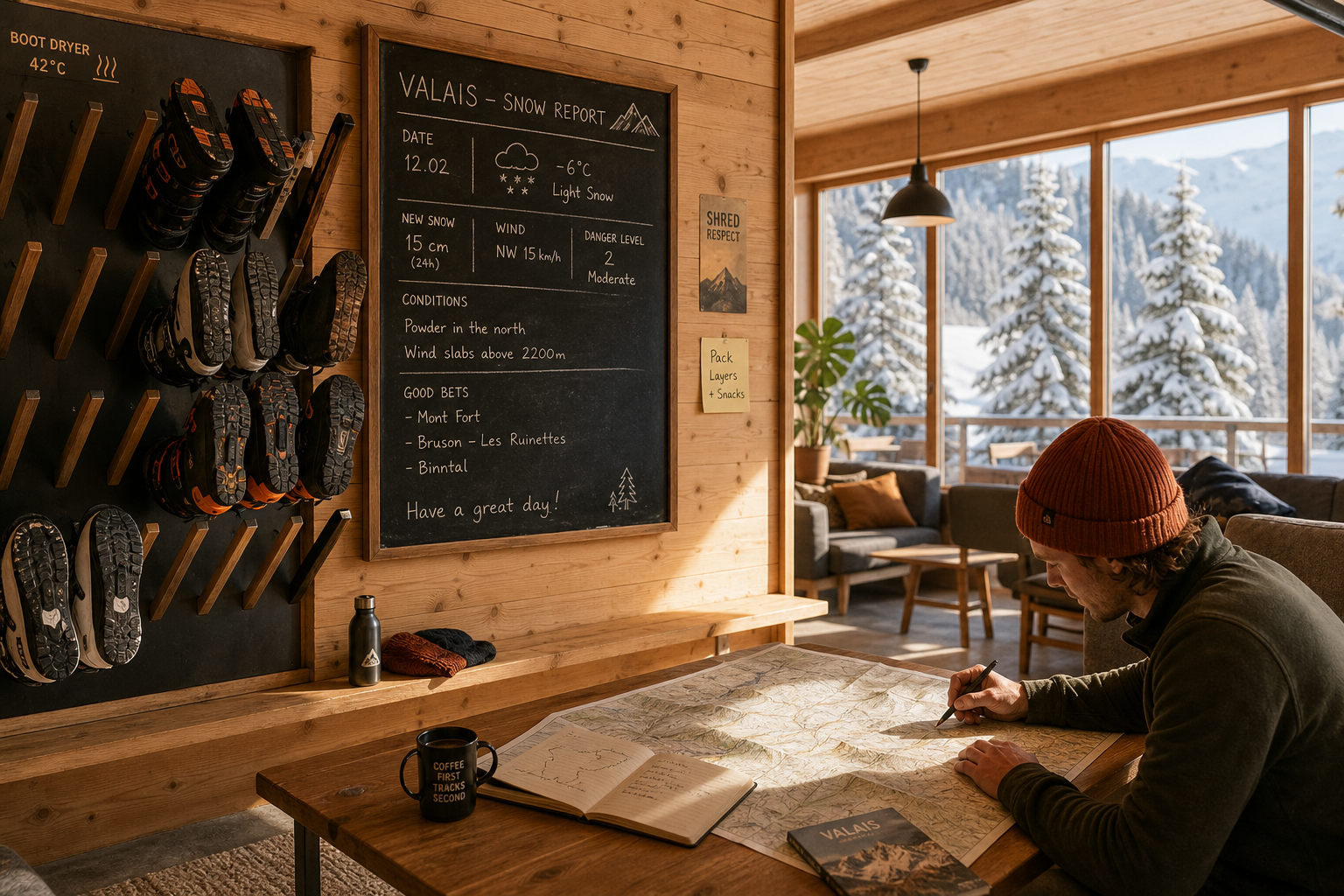
Dedicated ski hostels offer the best balance of affordability, infrastructure, and social connection for solo travelers, couples, and small groups. Unlike standard city youth hostels, ski hostels are tailored specifically around winter sports, featuring drying rooms for boots, secure ski racks, and early breakfast schedules.
Operations like Ski Hostel based at Relais de Dranse in Liddes combine budget-conscious shared and private rooms with organized shuttles directly to regional ski hills. This eliminates the logistical headaches of mountain driving and gear transport while providing digital nomads and winter enthusiasts with fast Wi-Fi and common working areas.
2. Valley Base Towns
Staying down in regional valley hubs—such as Martigny, Sion, or Brig—and taking regional buses or mountain trains up to the slopes each morning can significantly reduce nightly rates. Valley towns have wider hotel supply, standard municipal supermarket pricing, and extensive transit connections. The tradeoff is daily commuting time: you will spend 30 to 50 minutes traveling each way on mountain transit.
3. Self-Catered Group Chalets
If traveling with a group of six or more, renting a traditional chalet in a secondary village and splitting the cost can drop per-person accommodation expenses to under 50 CHF per night. The key is booking 6 to 9 months in advance, as affordable chalets in smaller Swiss villages sell out quickly to domestic skiers.
For a deeper look into the differences between general municipal accommodations and all-in winter sport properties, read our comparison of ski hostel packages vs youth hostels in Valais.
The Power of All-Inclusive Ski Packages
The most predictable way to control costs in Switzerland is booking bundled, all-inclusive budget packages.
When you purchase everything separately, small incidental expenses quickly accumulate: local tourist taxes, transit transfers, ski storage lockers, resort baggage handling, and single-meal restaurant markups.
Solo travel writer Finding Alexx highlighted how all-inclusive hostel models transform the economics of a Swiss ski trip. Instead of navigating separate bookings for bed, food, transport, and passes, a bundled package fixes your total trip cost up front.
+-----------------------------------------------------------------------------+
| INDEPENDENT DIY BOOKING vs ALL-INCLUSIVE BUNDLE (6 NIGHTS)                  |
+-----------------------------------------------------------------------------+
| Element                | Independent Booking (CHF) | Bundled Package (CHF)  |
| Shared/Dorm Lodging    | 360                       | Included               |
| 6-Day Regional Pass    | 240                       | Included               |
| Full-Board Meals       | 300 (Groceries/Cooking)   | Included (3 meals/day) |
| Daily Slope Shuttles   | 90 (Public Transit/Fuel)  | Included               |
| Total Estimated Cost   | ~990 CHF + logistics time | ~650 - 850 CHF total   |

+-----------------------------------------------------------------------------+
An all-inclusive model removes financial unpredictability. When your package covers your bed, breakfast, packed lunch for the mountain, hot evening dinner, ski pass, and private resort transfer, your daily on-mountain spending drops close to zero.
Beating the Food & Drink Expense
Food prices in Switzerland surprise many first-time visitors. A standard casual sit-down restaurant meal typically costs between 28 and 45 CHF for a single main course, while a pint of beer on a resort sun terrace can run 9 to 12 CHF. Over a seven-day trip, dining out three times a day can easily add 600 to 800 CHF to your baseline costs.
You can eat well in the Swiss Alps on a budget by following a few practical rules.
Use Local Supermarkets (Coop, Migros, Denner, Aldi, Lidl)
Swiss supermarkets are well-stocked and reasonably priced compared to restaurants. Denner, Aldi, and Lidl offer the cheapest baseline groceries, while Coop and Migros feature high-quality prepared sandwiches, fresh bread, local cheeses, and hot rotisserie chickens.
- Mountain Lunch Strategy: Buy fresh crusty baguettes, Gruyère or raclette cheese, local cured meats (viande des Grisons), and fruit in the morning. Pack them in your ski jacket or daypack for a scenic lunch at the top of the mountain.
- Thermos Flask: Carry a lightweight insulated flask with hot tea, coffee, or broth. This saves 5 to 7 CHF every time you want a warm drink on the slopes.
Understand Mountain Hut Etiquette
Many Swiss regional ski areas have public picnic rooms (often labeled salle hors-sac) located at the main gondola stations or mid-mountain huts. These rooms are warm, sheltered spaces where skiers can sit and eat their own packed food free of charge. Some even have microwaves and hot water dispensers.
Communal Dinners and Half-Board
If your lodging offers half-board or full-board dining, take advantage of it. Group dinners in ski hostels and alpine lodges are not only affordable, but they are also central to the social culture of European ski trips, offering a natural way to connect with other skiers after a day on the slopes.
Smart Transit: Getting to and Around the Swiss Alps
Switzerland possesses one of the world’s most comprehensive public transportation networks. You do not need an expensive rental car to reach the slopes. In fact, renting a car often adds unnecessary costs in winter tires, snow chains, fuel, and expensive resort parking garages.
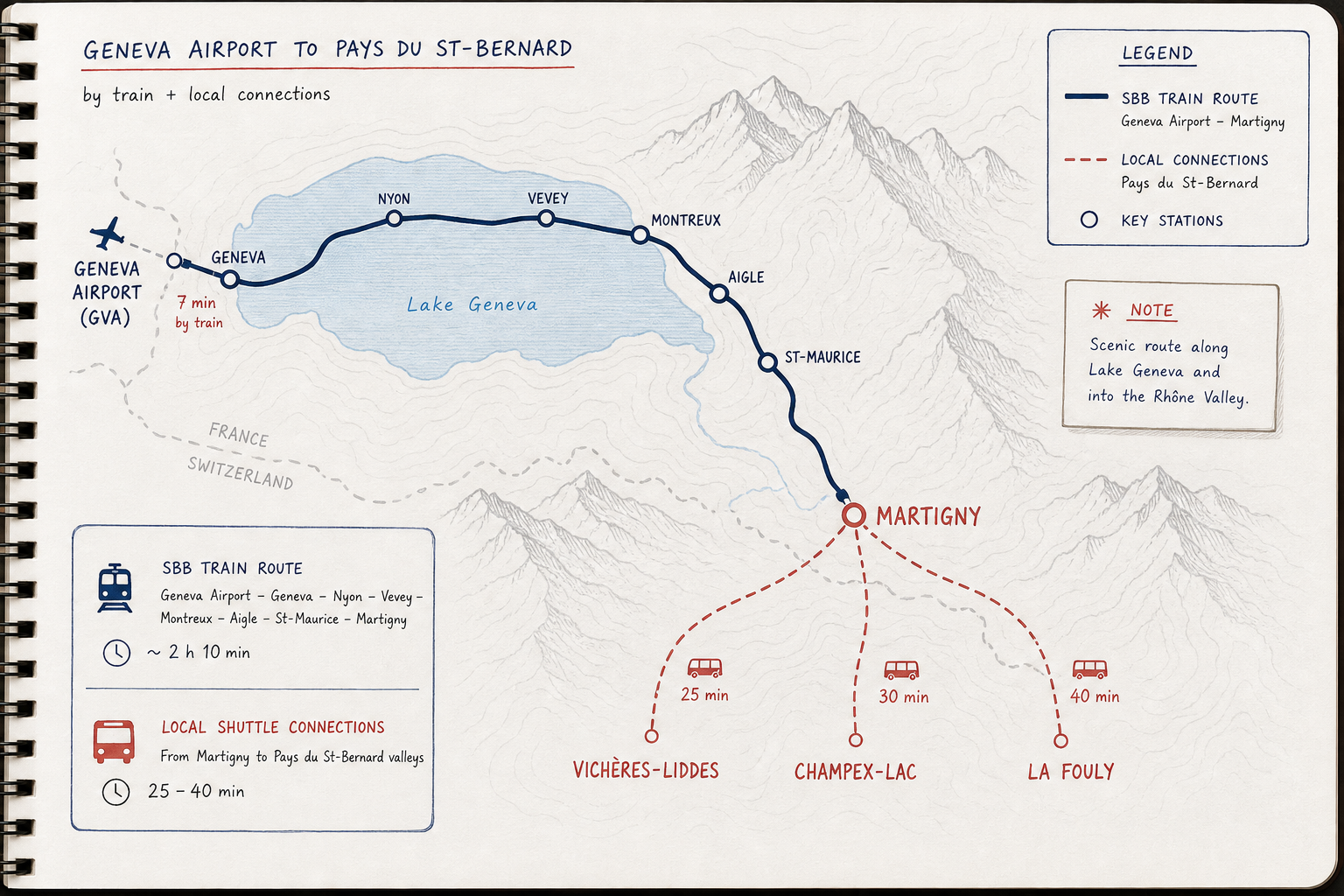
Arriving from European Airports
- Geneva Airport (GVA): The optimal gateway for skiing in the Valais region. The train station is integrated directly inside the airport terminal. Direct SBB trains run every 30 minutes along Lake Geneva straight into Martigny, Sion, and Visp.
- Zurich Airport (ZRH): Ideal for central and eastern Swiss ski destinations, with fast rail links connecting directly to Bern, Chur, and Brig.
- Milan Malpensa (MXP): A viable alternative for southern Valais resorts via the Simplon train corridor into Brig.
Transit Passes and Discounts
If traveling independently by train, purchasing point-to-point tickets on the day of travel is the most expensive method. Use these transit savings tactics instead:
- SBB Supersaver Tickets: Available on the official SBB mobile app. If you book your train route several weeks in advance for specific off-peak departure times, Supersaver tickets offer discounts up to 50% to 70% off regular fares.
- SBB Snow’n’Rail: As detailed in transport discussions on Reddit’s Alps ski community, the Swiss Federal Railways offers integrated Snow’n’Rail packages that combine return train/bus transit with discounted daily lift passes for dozens of resorts.
- Dedicated Hostel Shuttles: If staying at a specialized venue like Ski Hostel in Liddes, daily private shuttle vans take guests straight from the lodge doorstep to the lift base, bypassing regional bus schedules and walking in ski boots.
Equipment: Renting vs. Bringing Your Own
Carrying ski equipment across international borders or renting it on arrival requires a simple cost comparison.
+-----------------------------------------------------------------------------+
| SKI GEAR STRATEGY: PROS, CONS, AND TYPICAL COSTS                            |
+-----------------------------------------------------------------------------+
| Method           | Typical Cost      | Best For         | Key Advantage     |
| Bring Own Gear   | €40 - €90 airline | Experienced      | Familiar setup,   |
|                  | baggage fee       | skiers/riders    | tailored fit      |
| Valley Shop      | 120 - 180 CHF     | Multi-day trips, | Cheaper than      |
| Rental           | per week          | intermediate     | on-piste shops    |
| Package Add-on   | 100 - 150 CHF     | Budget travelers | Pre-fitted at     |
| Rental           | per week          | & beginners      | accommodation     |

+-----------------------------------------------------------------------------+
If you own fitted ski boots, always bring them with you as carry-on luggage. Boots determine comfort and control on the mountain. Skis and poles can easily be rented on-site, saving you the hassle of lugging heavy ski bags through airport terminals and train stations.
For full packing checklists and advice on budget-friendly layers, review our detailed guide on what equipment to bring for a budget European ski trip.
Case Example: A 7-Day Valais Ski Week Under 900 CHF
To see how these strategies work in practice, consider how an independent traveler named Mark organized an affordable 7-day ski trip to the Valais region in mid-January.
Instead of booking a luxury holiday in Verbier, Mark opted for an all-inclusive 6-night package at the Ski Hostel at Relais de Dranse in Liddes:
- Flight: 70 CHF round-trip flight from London Gatwick to Geneva Airport.
- Train Transit: 48 CHF round-trip using SBB Supersaver train tickets from Geneva Airport to Martigny/Orsières.
- Lodging & Meal Package: 650 CHF for a 6-night stay in a shared dorm, which included daily hearty breakfasts, DIY mountain packed lunches, and three-course communal dinners every night.
- Lift Tickets: Included in the package, providing access to Vichères-Liddes, La Fouly, and Champex-Lac.
- Shuttles: Included in the package via the hostel’s private morning and afternoon mountain vans.
- Gear: 110 CHF for a 6-day ski and pole rental package.
- Incidental spending (coffee, snacks, local beers): 45 CHF.
Total Trip Cost: 923 CHF (approx. €960 / $1,050 USD)
Over six days of skiing, Mark skied fresh powder in La Fouly, carved groomers in Vichères-Liddes, and explored tree runs in Champex-Lac, without waiting in lift lines or paying premium resort prices.
Organizing Budget Group Trips (10 to 20 People)
Planning a ski trip for a university club, corporate team, or friend group introduces unique logistical challenges. Large groups often struggle with scattered accommodations, conflicting food preferences, and expensive split transport.
To keep a large group trip organized and cost-effective:
- Lock in Shared Lodging Early: Large ski chalets and hostel dorm blocks book out months ahead. Booking a private wing of a ski hostel ensures your group stays together while keeping per-head costs predictable.
- Standardize the Meal Plan: Cooking for 15 people in a standard kitchen every evening quickly becomes chaotic. Choosing half-board or full-board accommodations eliminates shopping runs, bill splitting, and kitchen cleanup disputes.
- Consolidate Mountain Transit: Relying on 15 people to catch public buses on time often leads to delays. Using dedicated shuttle vans or staying within easy walking distance of lift access keeps the group moving smoothly.
- Negotiate Bulk Lift Rates: Regional ski areas often offer 10% to 15% discounts for pre-booked groups of 10 or more. Ensure one organizer collects passes in advance to avoid long morning ticket lines.
Digital Nomads and Solo Travelers: Skiing on a Budget
Solo travelers and remote workers face unique hurdles on ski vacations. Standard hotel rooms charge heavy single-occupancy supplements, and skiing alone at massive commercial resorts can feel isolating.
Smaller regional hubs and dedicated ski hostels offer a practical alternative:
- Community Atmosphere: Communal dining and shared living spaces make it straightforward to find ski partners of matching ability levels for morning runs.
- Remote Work Infrastructure: Modern ski hostels and coliving spaces cater directly to digital nomads, providing stable high-speed Wi-Fi, quiet work corners, and desk spaces alongside secure gear storage.
- Flexible Schedules: Digital nomads can take advantage of morning powder runs and complete their work shifts during the late afternoon and evening.
Frequently Asked Questions
How can I plan a budget-friendly ski trip to the Swiss Alps?
To plan an affordable trip, avoid mega-resorts like Zermatt and St. Moritz. Choose regional ski areas in the Valais or central Switzerland (such as Vichères-Liddes, La Fouly, or Champex-Lac), stay in dedicated ski hostels or valley accommodations, prepare your own mountain lunches using local supermarket groceries, and use SBB Supersaver train tickets for airport transit.
What is the most cost-effective way to get ski passes, gear rental, and lodging combined in Switzerland?
The most cost-effective method is booking an all-inclusive package at a specialized budget mountain lodge, such as Ski Hostel in Liddes. These packages bundle dormitory or private lodging, daily lift passes for multiple regional resorts, full-board meals, and mountain shuttles into a single fixed price, eliminating on-mountain markups.
How do I organize a group ski trip on a budget for 10 to 20 people in Switzerland?
Select a regional valley destination with modest lift pass prices, book an entire dorm floor or dedicated chalet, and choose full-board or half-board meal plans to avoid the logistics and expense of dining out. Coordinate transport through private shared shuttles or SBB group train bookings to secure bulk discounts.
Are cheap Swiss ski resorts good for intermediate and advanced skiers?
Yes. While regional Swiss resorts feature fewer total kilometers of marked piste than giant interconnected domains, they often feature superior snow quality, wide freeride terrain, tree runs, and empty slopes. Advanced skiers can enjoy untracked powder days after a snowfall because there are fewer crowds competing for fresh lines.
When is the cheapest time of year to ski in Switzerland?
The most affordable periods to ski in Switzerland are January (between the post-New Year rush and the February school holidays) and late March to early April. Lodging rates are significantly lower, slopes are quiet, and snow depths at high-altitude regional resorts remain reliable.
Summary Checklist for an Affordable Swiss Ski Trip
To keep your next Swiss ski holiday well within budget, stick to these core principles:
- [ ] Choose regional valleys over internationally advertised mega-resorts.
- [ ] Bundle your trip components using ski hostel packages or self-catered accommodations.
- [ ] Avoid daily restaurant dining by packing mountain lunches from local grocery stores.
- [ ] Travel by public transit and download the SBB app to secure advance Supersaver discounts.
- [ ] Bring your own boots and reserve rental packages in advance through valley shops or bundled lodging providers.
- [ ] Target off-peak weeks in mid-to-late January or late March for lower rates and quieter pistes.
By focusing on the mountains rather than resort commercialism, you can experience world-class skiing in the Swiss Alps without the luxury price tag.