Half board vs full board for an active ski holiday
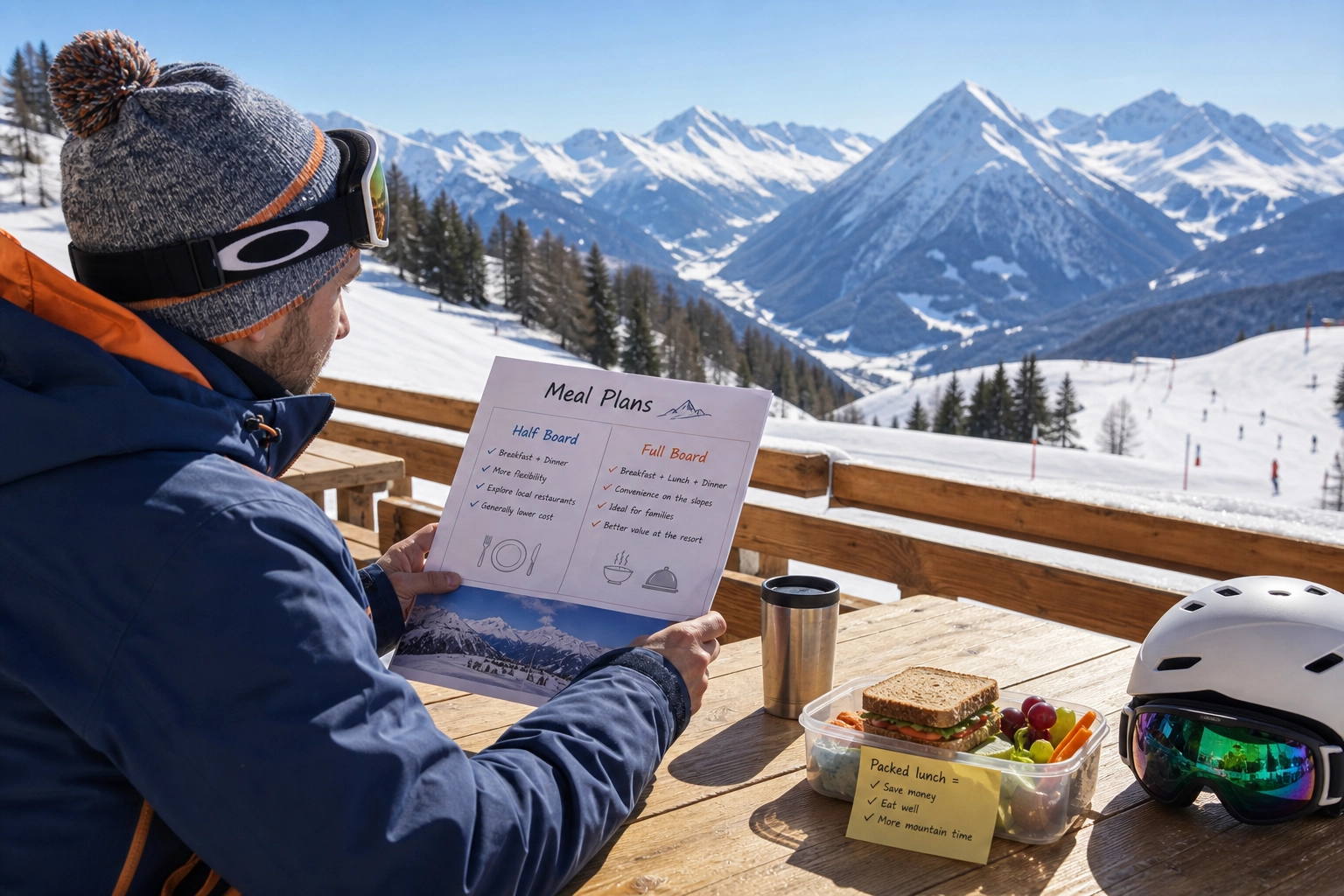
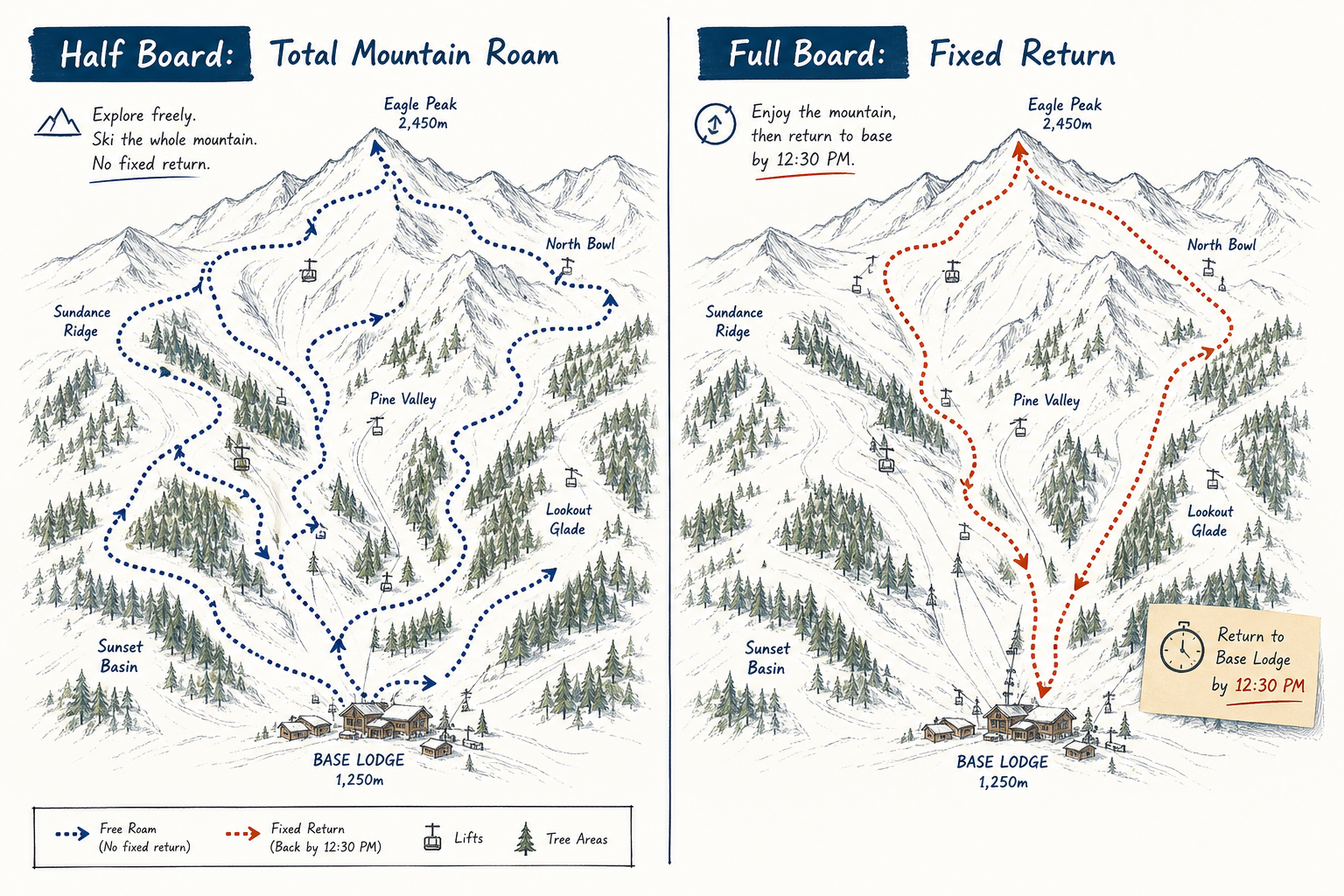
You are three valleys away from your hotel, navigating a perfectly groomed red run under a bluebird sky, when your stomach drops. It is 12:15 PM. You booked a full-board ski package that requires you to eat lunch in the hotel dining room between noon and 1:30 PM. To make it back in time, you have to abandon this pristine sector of the mountain, take two slow chairlifts in the wrong direction, and ski down a slushy access road.
If you miss it, you forfeit the lunch you already paid for and end up buying a thirty-franc bowl of soup at a mountain hut anyway.
This scenario perfectly illustrates the tension at the heart of booking winter sports accommodation. When planning a trip to the mountains, the choice between half board and full board dictates much more than your daily food budget. It dictates your skiing schedule, your geographic freedom on the mountain, and the overall rhythm of your holiday.
Whether you are a budget-conscious solo traveler looking to stretch every dollar in the Swiss Alps or a digital nomad squeezing in morning powder runs between afternoon meetings, getting your board basis right is critical. Let’s break down the mechanics, the hidden costs, and the strategic advantages of half board versus full board so you can map out the perfect active winter escape.
Decoding the Board Basis Terminology
Before analyzing which option suits an active itinerary, we need to strip away the marketing jargon. Hotels, chalets, and ski hostels use standard terms to describe meal inclusions, but high-altitude environments warp how these services are actually delivered.
What is Half Board?
In the hospitality industry, half board means your accommodation includes two meals: breakfast and dinner.
On a ski holiday, this is the most common and historically popular setup. You wake up, consume a calorie-dense breakfast at your lodge, spend the entire day on the mountain, and return in the evening to a hot, multi-course dinner. Any food or drink consumed between leaving the breakfast table and sitting down for dinner is your responsibility to source and fund.
What is Full Board?
Full board includes breakfast, lunch, and dinner.
In a beach resort, full board means wandering up from the pool to the buffet. In a ski resort, full board is much more complicated. Some traditional hotels require you to return to the property for a seated lunch. However, modern alpine accommodations tailored to active skiers—like many ski hostels and adventure lodges—adapt this by providing a packed lunch at breakfast. You make your own sandwiches from a designated buffet, pack up some fruit and snacks, and carry your lunch with you on the slopes.
The Case for Half Board: Ultimate Mountain Freedom
For an active ski holiday, half board is frequently considered the gold standard for experienced riders. The primary advantage of half board is total geographic and temporal flexibility.
When your lunch is not tied to a specific building at the base of the valley, the entire ski map is at your disposal. You can follow the snow conditions, chase the sun across different faces of the mountain, and stop to eat precisely when your legs tell you it is time to rest.
Strategic Pacing and Spontaneity
Skiing and snowboarding are weather-dependent sports. On a powder day, the last thing you want is a scheduled interruption. Half board allows you to ski aggressively through the prime morning hours, perhaps grabbing a quick espresso and a pastry at a mid-station, and delaying a heavier lunch until 2:00 PM when the lift lines peak and the snow gets chopped up.
Lunch is where you want flexibility; if you are skiing all day, you will probably eat on the mountain rather than return to the hotel (www.weski.com).
Exploring Extensive Ski Domains
If you are visiting a vast, interconnected ski area, half board is almost a logistical necessity. Trying to navigate back to your starting village for a midday meal limits your exploration radius. With half board, you can ski from one valley to the next, stopping at an atmospheric high-altitude hut for local specialties—like a rich cheese fondue or crispy rösti—without feeling guilty that you are double-paying for food.
It allows you to choose your lunch based on exactly where you are skiing, rather than interrupting a massive cross-mountain itinerary to rush back to base camp.
Culinary Variety
Part of the joy of European skiing is the mountain gastronomy. Half board ensures you retain the option to eat out in the resort occasionally, which is especially worthwhile if the area boasts incredible mountain restaurants or lively après-ski food scenes (www.heidi.com).
The Hidden Costs of Half Board
While half board offers freedom, it transfers financial risk directly onto your shoulders. Mountain restaurants operate in harsh environments. Ingredients arrive via snowcat, helicopter, or cable car, and the prices reflect those logistical hurdles.
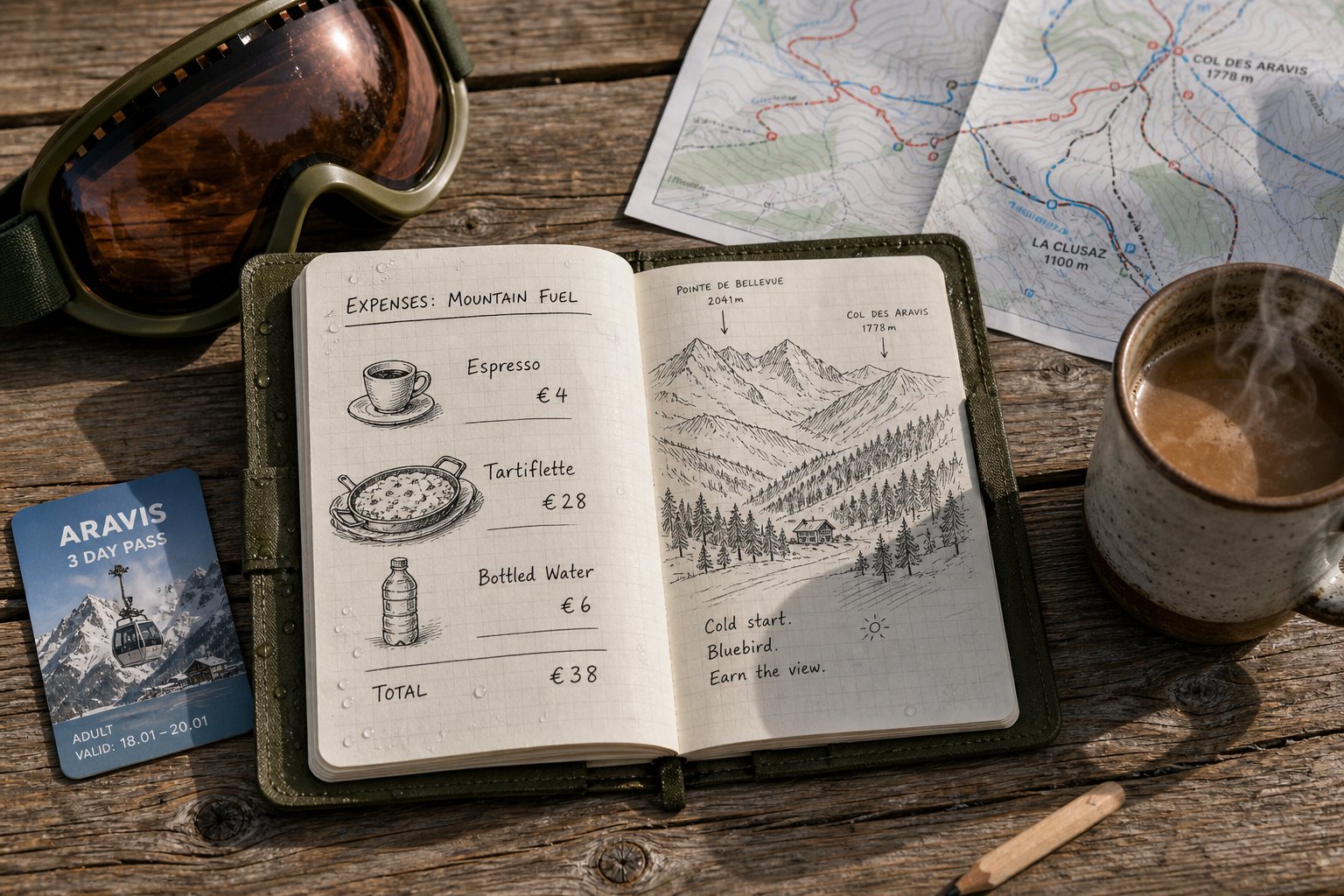
If you are skiing in Switzerland, France, or Austria, a sit-down lunch at a mountain restaurant can easily cost between €25 and €45 per person, per day. Over a six-day ski trip, that is an additional €150 to €270 that was not factored into your initial booking price.
The Snack Tax
Beyond the main lunch, active skiers burn thousands of calories. You will likely stop for hot chocolate, mulled wine, or mid-morning energy bars. When you are on half board, every one of these stops chips away at your travel budget. For a solo traveler trying to keep costs low, the cumulative effect of mountain dining can quickly turn an affordable trip into an expensive one.
The Case for Full Board: Locking in Your Budget
Full board often gets a bad reputation among die-hard skiers who picture a restrictive, cruise-ship style dining schedule. But when executed correctly by a property that understands winter sports, full board is the ultimate financial hack for an active ski holiday.
I’d consider full board if you want to minimise spending and planning, allowing you to focus entirely on the sport rather than budget management.
The Packed Lunch Paradigm
The secret to successful full-board skiing is the packed lunch. You must verify how the accommodation handles the midday meal. If the hotel provides packed lunches or mountain lunch arrangements rather than requiring you to return to the hotel, full board suddenly matches the flexibility of half board (www.weski.com).
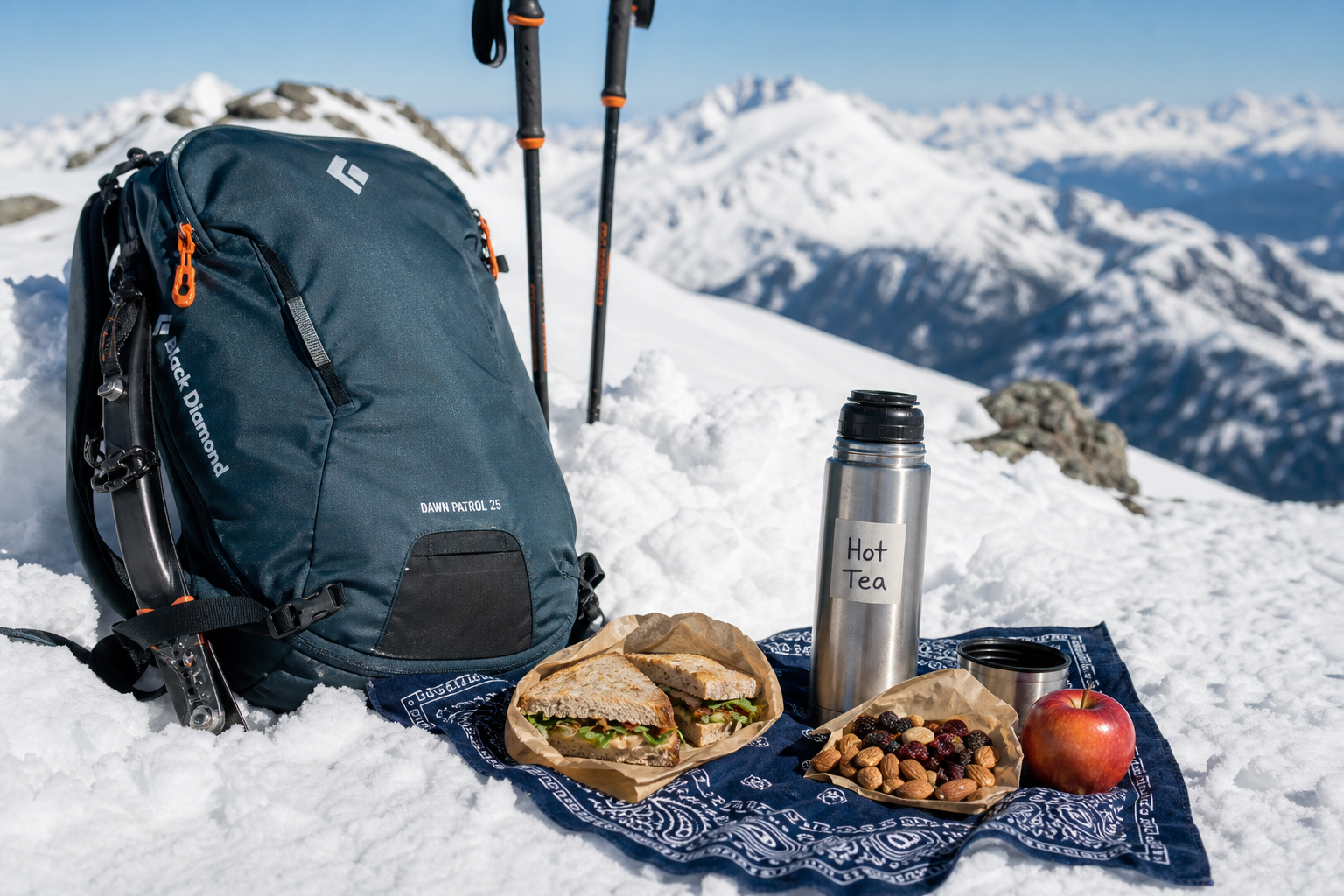
Imagine waking up, eating a hearty breakfast, and then spending five minutes at a sandwich station packing fresh bread, local cheeses, cured meats, and trail mix into your backpack. You now have total geographic freedom. You can eat your sandwich on a chairlift to maximize ride time, or pull over at a scenic alpine viewpoint far away from the crowded, overpriced mountain restaurants.
The Freeride and Backcountry Advantage
For those seeking outabounds ski and board adventures, relying on mountain restaurants is impossible. Once you leave the marked pistes and enter the backcountry, there are no warming huts serving hot soup.
Freeriders and ski tourers burn massive amounts of energy hiking and navigating deep snow. Having a high-calorie packed lunch provided by your accommodation means you are safely fueled for remote terrain without needing to detour into a village supermarket the night before.
Stress-Free Group and Solo Travel
When traveling solo, eating at busy mountain restaurants can be awkward, as tables are often reserved for large groups. A full board packed lunch allows solo travelers to eat wherever they feel comfortable.
For groups, trying to agree on a restaurant that fits everyone’s budget and dietary requirements is a fast track to an argument. When everyone has their lunch packed in their bags, the group can stop anywhere, eat together, and get right back to skiing.
Analyzing the Daily Schedule: How Both Options Play Out
To truly understand which board basis will elevate your active ski holiday, we need to look at how they shape the physical reality of a day on the mountain. Let’s follow two realistic scenarios.
Scenario A: The Dawn-to-Dusk Skier (Half Board)
- 07:30 AM: Wake up and head to the hotel breakfast buffet. Load up on complex carbohydrates (oatmeal, whole-grain bread) and proteins to sustain energy.
- 08:30 AM: First lifts up. The snow is perfect corduroy.
- 11:00 AM: Legs are burning. Stop at a mid-mountain café for an espresso and a slice of cake (€12).
- 01:30 PM: Peak lunch hour is fading. Ski over to a highly-rated mountain hut. Order a plate of tartiflette and a large sparkling water (€32).
- 02:30 PM: Back on the snow, but feeling slightly sluggish from a heavy, warm meal.
- 04:30 PM: Last run down to the valley.
- 07:00 PM: Return to the hotel for the included half-board dinner.
- Total daily extra spend: €44.
This skier enjoyed incredible food and total freedom, but they paid a premium for it and lost an hour of prime afternoon skiing to a restaurant stop.
Scenario B: The Budget-Maximizing Nomad (Full Board with Packed Lunch)
- 07:30 AM: Breakfast at the ski hostel. While eating, pack a custom sandwich, grab two pieces of fruit, and fill a thermos with hot tea provided by the hostel.
- 08:30 AM: First lifts up.
- 11:30 AM: The lift lines are getting long. Drink some hot tea on the gondola to stay warm.
- 01:00 PM: While the mountain restaurants are overflowing with stressed tourists hunting for tables, pull off the piste near a quiet tree line. Eat the packed sandwich in the sun. Total stop time: 20 minutes.
- 01:20 PM: Back on the slopes while the pistes are empty because everyone else is still inside eating.
- 04:30 PM: Last run down.
- 07:00 PM: Return to the lodge for the included community dinner.
- Total daily extra spend: €0.
This skier saved money, avoided crowds, and maximized their time on the snow, though they missed out on the cultural experience of hot alpine dining.
5 Critical Questions to Ask Before Booking
Making the right choice requires looking beyond the price tag and interrogating the logistics of your specific trip. Before you lock in half or full board, ask yourself these five questions:
1. What is the geographic layout of the ski resort?
If you are visiting a smaller, intimate resort (like Vichères-Liddes or Champex-Lac in the Swiss Valais), dropping back into the base area for a quick lunch or eating a packed lunch on a central bench is easy. The terrain naturally funnels you back. In contrast, massive resorts with hundreds of kilometers of linked pistes demand the flexibility of half board, as you may end up valleys away from your starting point.
If you are organizing your trip in Switzerland, understanding resort scale is vital. You can learn more about picking the right scale in our guide on how to plan an affordable ski trip in the Swiss Alps.
2. What exactly constitutes “lunch” on the full board plan?
Never assume. Always read the fine print or email the property. Ask specifically: “Is the full board lunch a sit-down meal at the lodge, or do you provide packed lunches to take on the mountain?” If it is a sit-down meal, ask if they offer meal vouchers for partner restaurants on the mountain. If they offer none of these and expect you back at the dining room at 12:30 PM, strongly consider half board instead.
3. Do you have the right gear to carry food?
A packed lunch is only useful if you can comfortably carry it without crushing it or freezing it. Skiing with a backpack requires a well-fitted, low-profile pack that won’t throw off your center of gravity on steep descents. Furthermore, you need to ensure your liquids won’t freeze in sub-zero temperatures. If you aren’t used to skiing with a pack, carrying sandwiches might be more irritating than it’s worth. For tips on managing gear without overspending, check our advice on what equipment to bring for a budget European ski trip.
4. What is your actual budget tolerance?
Be honest with yourself about your spending habits. If you book half board telling yourself you will “just grab a cheap snack,” but you know you are prone to ordering expensive burgers and beers when you get tired and cold, your budget will blow out. If you have strict financial limits, full board acts as a spending guardrail.
5. Who are you traveling with?
Groups with mixed abilities often split up during the morning and reconvene for lunch. Finding each other at a specific mountain restaurant at 1:00 PM can be a logistical nightmare of lost cell reception and missed text messages. A full-board setup where everyone has their own packed lunch means the expert skiers don’t have to cut their powder runs short to meet the beginners at a restaurant—everyone eats on their own schedule.
The Digital Nomad and Remote Worker Edge Case
The rise of remote work has fundamentally changed ski holidays. Not everyone is looking to ski from first chair to last call.
If you are a digital nomad spending a month in the mountains, you might work from 8:00 AM to 1:00 PM, and ski from 1:30 PM until the lifts close. In this highly specific scenario, a traditional, sit-down full board option at your accommodation is a massive advantage. You can finish your morning deep-work session, walk down to the lodge dining room for a hot, prepared lunch, and then immediately head out to the slopes for the afternoon. It completely eliminates meal-prep time, allowing you to maximize the tight window between work and skiing.
Modern lodging models are adapting to this exact demographic. If you are curious how community-focused accommodations compare to traditional setups, you can read our breakdown of ski hostel packages vs youth hostels in Valais.
The Cost-Benefit Breakdown: A Financial Look
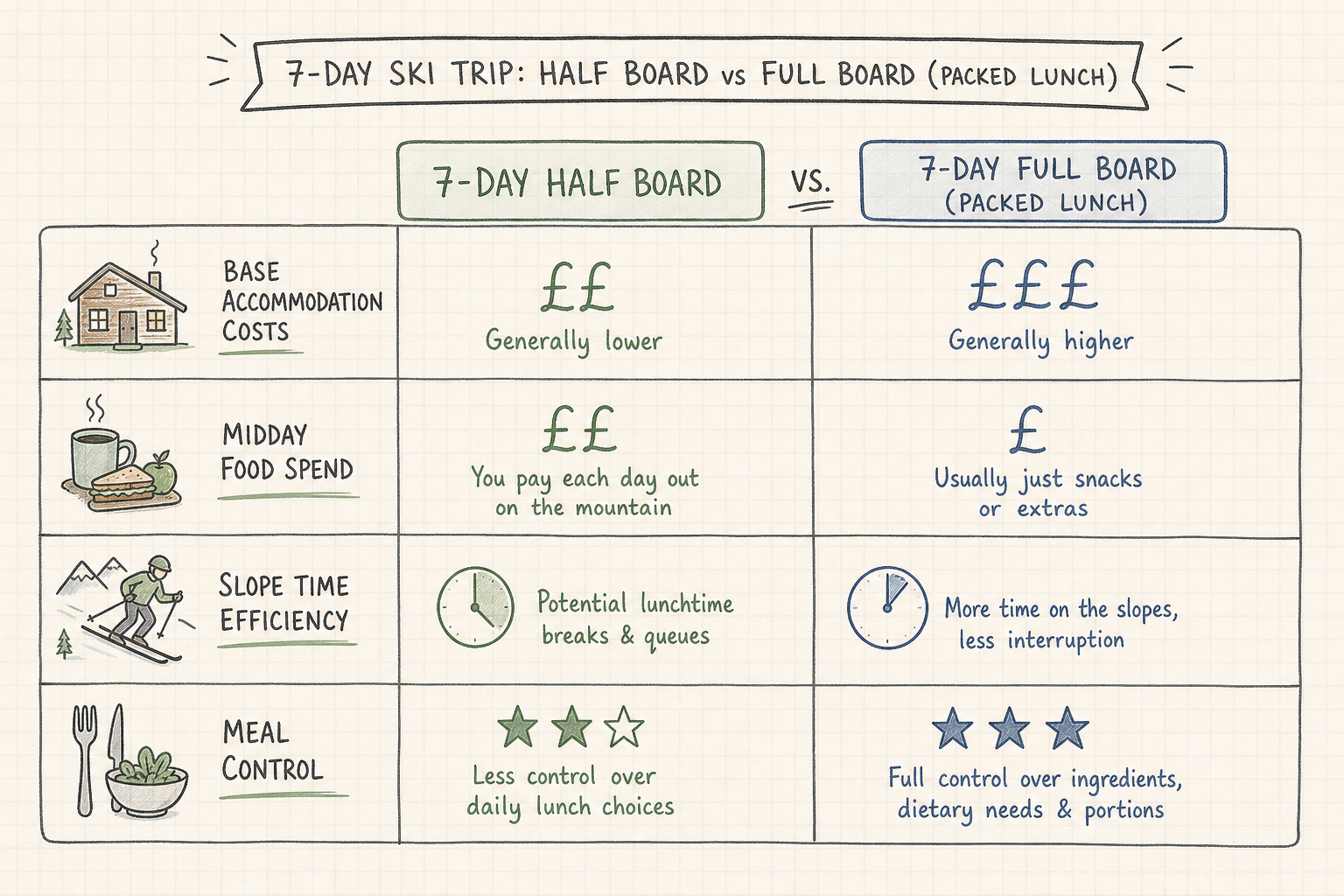
To crystallize the decision, let’s look at a conservative financial breakdown of a 7-day ski trip in the Swiss Alps, comparing a half board package versus an all-inclusive full board package that provides packed lunches.
| Expense Category | Half Board (Self-Funded Lunches) | Full Board (Packed Lunches Included) |
|---|---|---|
| Base Package Price | €700 | €820 |
| Breakfast | Included | Included |
| Mountain Lunches (7 days) | €175 (€25/day avg) | €0 (Packed daily) |
| Mountain Drinks/Coffees | €35 (€5/day avg) | €0 (Thermos filled at breakfast) |
| Dinner | Included | Included |
| Total Weekly Food Spend | €910 | €820 |
Note: Prices are illustrative estimates for standard Alpine resorts.
On the surface, the half board base package looks cheaper. But when you factor in the realities of mountain pricing, the full board package actually saves nearly €100 while completely eliminating the daily friction of pulling out your wallet. For a budget-conscious skier, that €100 difference is the cost of a multi-day equipment rental or a round-trip airport transfer.
Weather Dependency and Dietary Restrictions
Two external factors rarely discussed in the board-basis debate are weather volatility and dietary needs.
Surviving Whiteout Conditions
When the weather turns nasty—bitter winds, heavy snow, and flat light—nobody wants to eat a cold sandwich on a chairlift. On a whiteout day, the warmth and comfort of a mountain restaurant are essential for morale.
If you are on half board, ducking into a restaurant to warm up and eat a hot meal is a natural pivot. If you are on a full board packed-lunch plan, you might feel compelled to endure the cold to eat your sandwich, or you might end up buying hot food anyway to justify sitting at a restaurant table, effectively paying twice for lunch that day.
Pro Tip: If you are on a packed-lunch full board plan during a blizzard, find a designated indoor picnic room (salle hors-sac). Many French and Swiss resorts offer these heated rooms for skiers who bring their own food.
Managing Complex Diets at Altitude
If you are vegan, gluten-free, or managing severe food allergies, half board presents a significant daily challenge. Mountain restaurants are notoriously traditional. Menus lean heavily on melted cheese, bread, cured pork, and cream. Finding a safe, fulfilling vegan or celiac-friendly meal at 2,500 meters can be frustrating and highly expensive.
Full board accommodations, especially those catering to modern international travelers, are far better equipped to manage dietary requests. By organizing your packed lunch at your lodging, you guarantee that your midday calories align with your dietary needs, completely removing the anxiety of hunting for a vegan option on a snowy peak.
Addressing the Beverage Gap
A common point of confusion when comparing board types is the inclusion of drinks.
In almost all standard half board and full board packages, drinks at dinner are not included. You will be expected to pay for your table wine, sodas, or beers at the end of the meal or at the end of your stay.
However, full board often includes access to breakfast beverages to fill your thermoses—like hot water for tea or drip coffee. If keeping hydrated on the mountain without spending €6 per bottle of water is a priority, ensure you bring a durable hydration bladder or insulated flask. Fill it at the lodge every morning, regardless of which board plan you choose.
The Ski Hostel Approach
At Ski Hostel, our philosophy is built around removing the friction and unpredictable costs of winter sports. We know that budget-conscious skiers, solo travelers, and digital nomads want to experience the thrill of the Swiss Alps without the luxury-resort price tag.
This is why we lean heavily into a comprehensive full-board model. By bundling accommodation, community dinners, and the vital packed lunch, we allow our guests to hit the slopes of Vichères-Liddes, La Fouly, and Champex-Lac knowing exactly what their trip will cost. There is no midday panic about affording a mountain restaurant, and there is no pressure to cut a powder day short to return to the lodge.
You wake up, you fuel up, you pack your bag, and you own the mountain.
Frequently Asked Questions (FAQ)
Is half board or full board accommodation better for an active ski holiday?
For an active ski holiday, half board is generally considered the best balance of convenience and freedom, as it covers breakfast and dinner while allowing you to ski all day and choose where to eat lunch on the mountain. Breakfast and dinner are covered, so you can fuel up before skiing and have a proper meal waiting when you return. Half board is also the most common setup for ski hotels (www.heidi.com).
However, full board is better if the accommodation provides a packed lunch, as this saves money and time for budget-conscious skiers, freeriders, and families who don’t want to navigate expensive mountain restaurants.
Does full board mean I have to eat at the hotel every day?
Not necessarily, but it depends entirely on the property. In beach resorts, full board usually means returning to the dining room. In ski accommodations, it frequently means the lodge provides a packed lunch for you to take on the mountain. Always verify this directly with the accommodation before booking.
Are drinks included in half board or full board packages?
Typically, no. Both half board and full board usually exclude alcoholic beverages and soft drinks at dinner. You will usually get coffee, tea, and juice included during breakfast. If you want all your alcohol and evening drinks covered, you need to look for an “All-Inclusive” package, which is a tier above full board.
Can I change from half board to full board when I arrive?
If you are staying at a property that offers both, you can often upgrade to full board upon arrival for a daily supplemental fee. However, downgrading from full board to half board to get a refund is rarely permitted once the holiday has started, as the kitchen has already ordered provisions based on your initial booking.
What happens to my full board lunch if I ski in a different valley?
If your full board package requires a sit-down hotel lunch and you ski into a different valley, you will miss your meal. This is why a packed lunch option is vastly superior for active skiers looking to explore expansive terrain.
Final Thoughts on Pacing Your Alpine Experience
Choosing between half board and full board is ultimately a choice about how you want your ski days to flow.
If you view lunch as a cultural experience—a time to unclip from your bindings, sit on a sun-drenched terrace, drink a glass of local wine, and savor local mountain gastronomy—half board provides the canvas for that experience. It gives you the freedom to roam and the flexibility to dine wherever the snow takes you.
But if you view food primarily as fuel, and you prioritize maximum slope time, untouched out-of-bounds terrain, and strict budget control, full board with a packed lunch is an unbeatable strategy. It protects your wallet from high-altitude inflation and keeps you on the snow while everyone else is standing in line for a table.
Evaluate your budget, assess the terrain you plan to conquer, and decide what role the midday meal plays in your ideal winter escape. With the right board basis locked in, the only thing you’ll need to worry about on the mountain is keeping your tips up and enjoying the descent.