European ski hostel guest demographics and age range profile
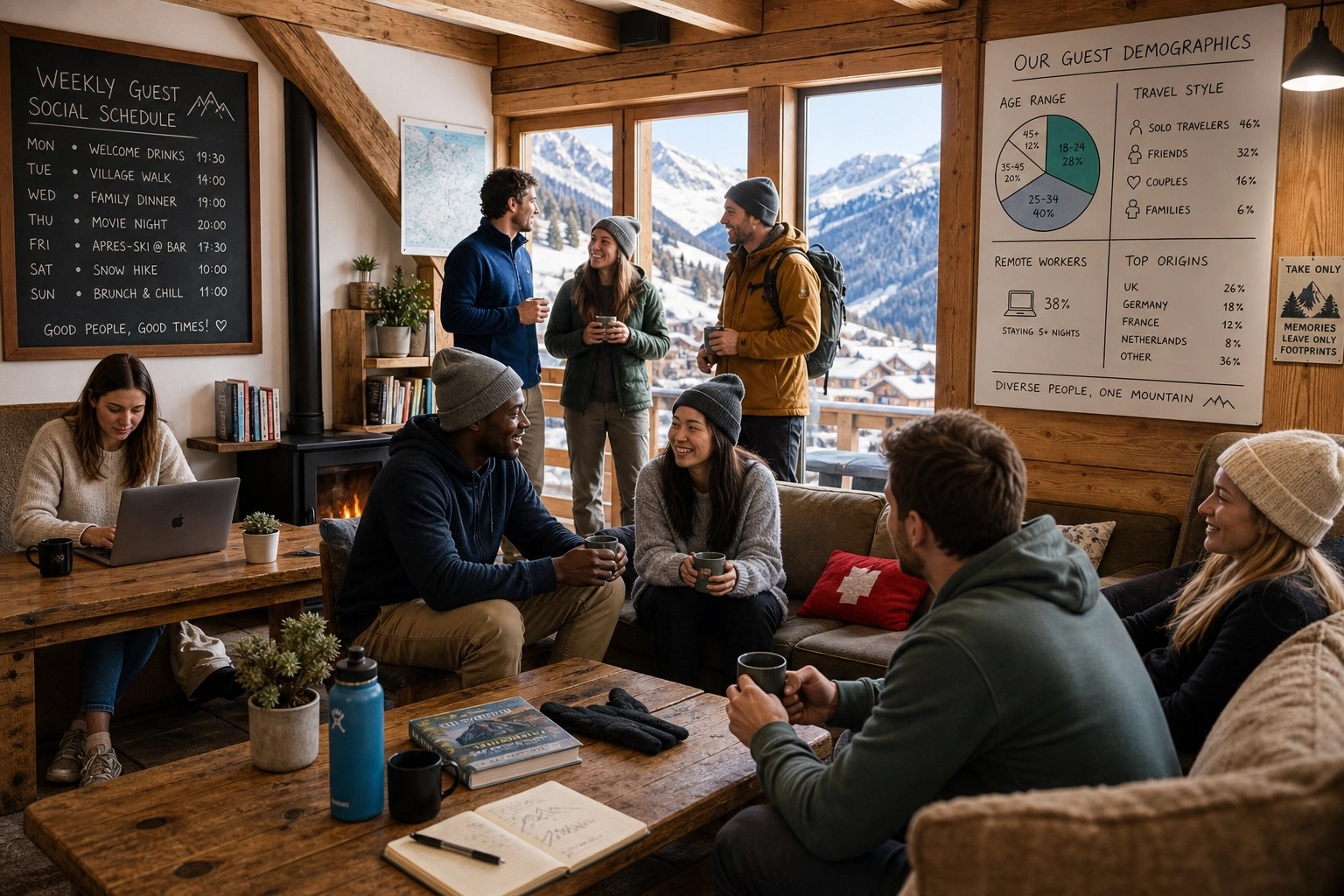
If you picture a European ski hostel as a chaotic, echoing building filled exclusively with 19-year-olds surviving on instant noodles and cheap beer, your frame of reference is a few decades out of date. While traditional urban youth hostels built their reputations on catering to the youngest, most budget-strapped backpackers, mountain-based ski hostels have evolved into an entirely different category of accommodation.
The reality of the modern European ski hostel demographic is vastly more complex, older, and more professional than the stereotype suggests. As major alpine resorts have steadily increased the prices of lift passes, equipment rentals, and slope-side hotels, a wide swath of winter sports enthusiasts—ranging from remote-working professionals to active retirees—have been priced out of the traditional chalet model. They have turned to modern ski hostels not just for the cost savings, but for the communal atmosphere, logistical convenience, and immediate access to the mountains.
Understanding who actually stays in these properties helps you set accurate expectations for your next winter trip. Whether you are wondering if you have aged out of the hostel scene, or you are trying to find a social environment that still respects a good night’s sleep before a powder day, breaking down the age ranges and psychographics of the modern ski hostel guest reveals a highly dynamic travel community.
The core age demographics of European ski hostels
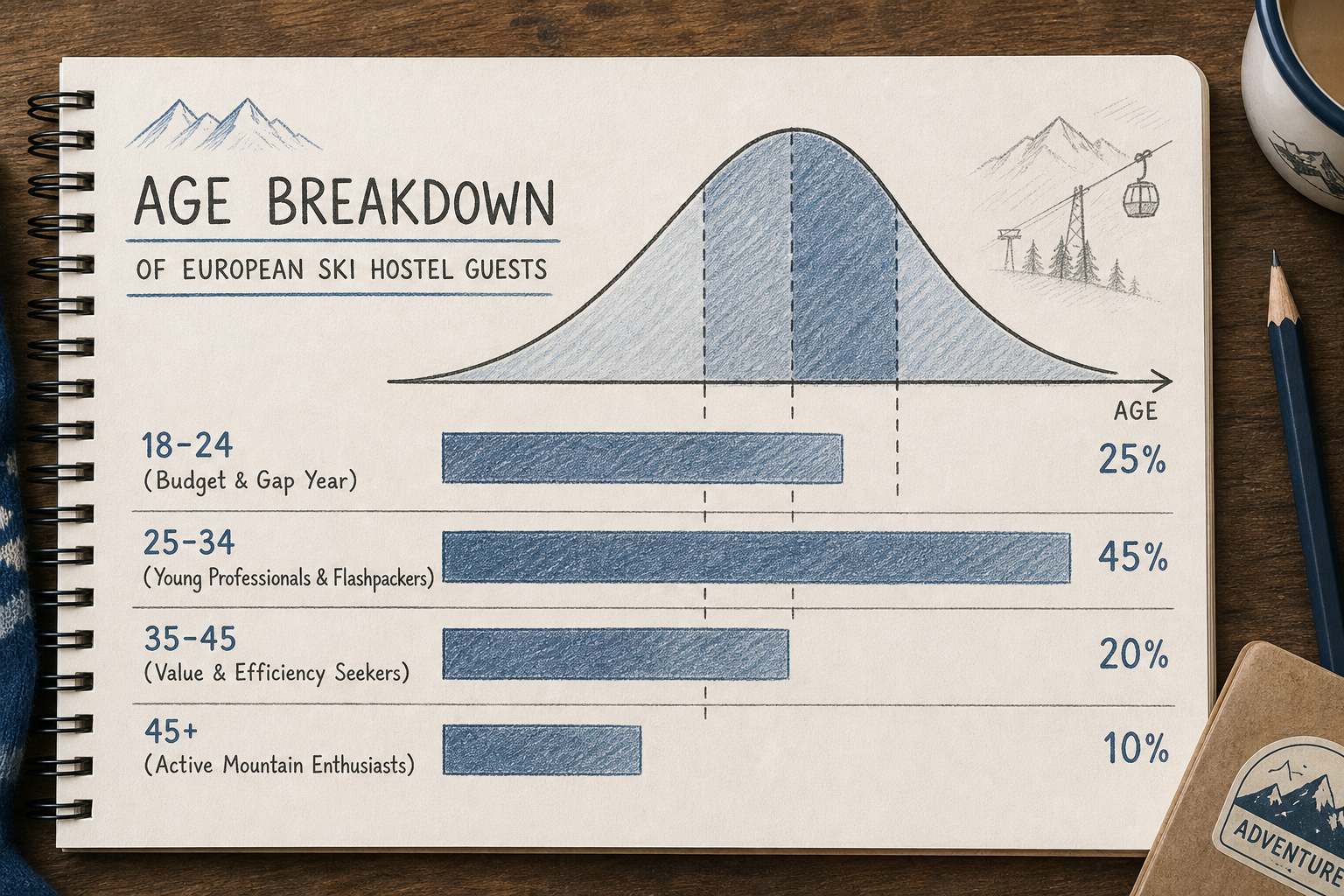
When analyzing who books beds in mountain hostels across the Alps, the data consistently shows a bell curve that peaks in the late twenties and early thirties, with surprisingly long tails extending into middle age and beyond.
18–24: The traditional backpacker and gap-year skier
The youngest cohort of adult travelers still makes up a significant, highly visible percentage of the European ski hostel market. This group primarily consists of university students on winter break, gap-year travelers doing a circuit of Europe, and young adults experiencing their first independent ski holidays.
Their primary motivation is almost exclusively budget-driven. Because traditional ski resorts require heavy upfront capital for accommodation, passes, and food, this demographic gravitates toward properties that allow them to stretch their travel funds. They are highly social, eager to participate in organized group activities, and generally tolerant of larger dormitory-style rooms if it means saving money for lift passes and nightlife.
Certain large-scale operators actively target this specific age bracket to cultivate a high-energy environment. For example, some organizations run dedicated 18–30 programs to guarantee a young, strictly peer-to-peer social dynamic. These environments are fantastic if you want a guaranteed party atmosphere, but they represent only a specific subset of the broader mountain hostel landscape. Most independent ski hostels do not impose maximum age limits and attract a much wider demographic spread.
25–34: The sweet spot for independent ski hostels
If you walk into the common room of a well-run mountain hostel in the Swiss Alps today, the dominant age group you will encounter falls squarely between 25 and 34. This demographic is the financial and cultural engine of the modern hostel industry.
According to hospitality industry research, including data highlighted by Hostelworld Group, this segment is driving the evolution of the “flashpacker” concept. These are young professionals, seasoned travelers, and couples who have aged out of the desire to sleep in a 16-bed dorm, but who outright reject the isolation and sterility of a standard mid-range hotel.
For the 25–34 demographic, the choice to stay in a ski hostel is less about absolute economic necessity and more about value optimization and social connectivity. They have disposable income, but they would rather spend it on an upgraded freeride setup or an extra week on the mountain than on a formal hotel lobby they will never use. Hospitality trends reported by CoStar indicate that these travelers actively seek out “trendy hostels” because they offer a curated, community-led experience that traditional hotels struggle to replicate.
Guests in this age bracket tend to book smaller shared rooms (like 4-bed or 6-bed dorms) or private rooms within the hostel. They care deeply about functional amenities: robust drying rooms for their gear, reliable ski shuttles, high-speed Wi-Fi, and quality local food. They are typically serious about their winter sports; their priority is making the first chairlift in the morning rather than staying up until 3:00 AM.
35–45: The rise of the mountain hostel guest
One of the most persistent myths about hostel travel is that you magically age out of it the moment you turn 35. In reality, the 35–45 demographic is increasingly common in European ski hostels, particularly in regions like the Swiss Valais where independent, mountain-focused lodging thrives.
Travelers in this group often include lifelong skiers and snowboarders who have grown tired of the logistical headaches of organizing massive group chalet rentals. Getting six friends in their late thirties to align their annual leave, agree on a budget, and coordinate flights is notoriously difficult. Instead, individuals in this age range frequently opt to travel solo or in pairs, utilizing the infrastructure of a ski hostel to handle the logistics.
This demographic values efficiency and rest. They are drawn to properties that offer seamless packages—where accommodation, lift passes, and meals are bundled together. They appreciate the communal dining tables of a hostel for the chance to swap trail recommendations with other skiers, but they also expect a higher baseline of comfort, such as quality mattresses, clean modern bathrooms, and a reasonably quiet environment after 10:00 PM.
45+: The active older traveler
While they remain a minority in standard urban youth hostels, travelers over 45 are a rapidly growing segment in European mountain hostels. Mainstream travel commentators, including Rick Steves and mainstream outlets like CBS News, have documented the phenomenon of older guests returning to hostel environments.
For the 45+ ski hostel guest, the appeal lies in the active, unpretentious atmosphere. Many in this demographic are highly experienced mountaineers, ski tourers, or long-distance hikers. They view their accommodation as a practical basecamp rather than a luxury retreat. They are generally unbothered by sharing a breakfast table with someone half their age; in fact, the intergenerational exchange is often cited as a primary reason they prefer hostels over quiet, homogenous resort hotels.
When older travelers book ski hostels, they almost exclusively target properties with private rooms or very small, quiet dormitories. They also heavily favor locations that offer easy transport links, preferring places that run their own mountain shuttles over properties that require a complicated mix of public buses and long walks with heavy gear.
Beyond age: the psychographics of the modern guest
Demographics only tell half the story. To truly understand who stays at a European ski hostel, you have to look at their psychographics—their habits, goals, and working styles. The shift in mountain lodging is driven by distinct traveler archetypes that cross generational lines.
The solo traveler seeking community
Solo skiing can be incredibly isolating, and traditional resort hotels heavily penalize solo travelers through exorbitant single supplement fees. If a standard hotel room costs 200 CHF a night, the solo traveler absorbs that entire cost, whereas a couple cuts it in half.
Ski hostels solve the economic penalty of solo travel while simultaneously fixing the social isolation. The modern hostel environment is engineered for natural interaction. You might arrive in the Swiss Alps completely alone, but within two hours of checking in, you are sitting at a communal dinner table discussing snow conditions. By the time breakfast rolls around, you have likely found someone with a similar skiing ability to ride the lifts with.
This appeals universally, whether the solo traveler is a 22-year-old student or a 55-year-old divorced professional looking to get back on the slopes. The built-in community is the primary product; the bed is just where they sleep.
The digital nomad skiing between calls
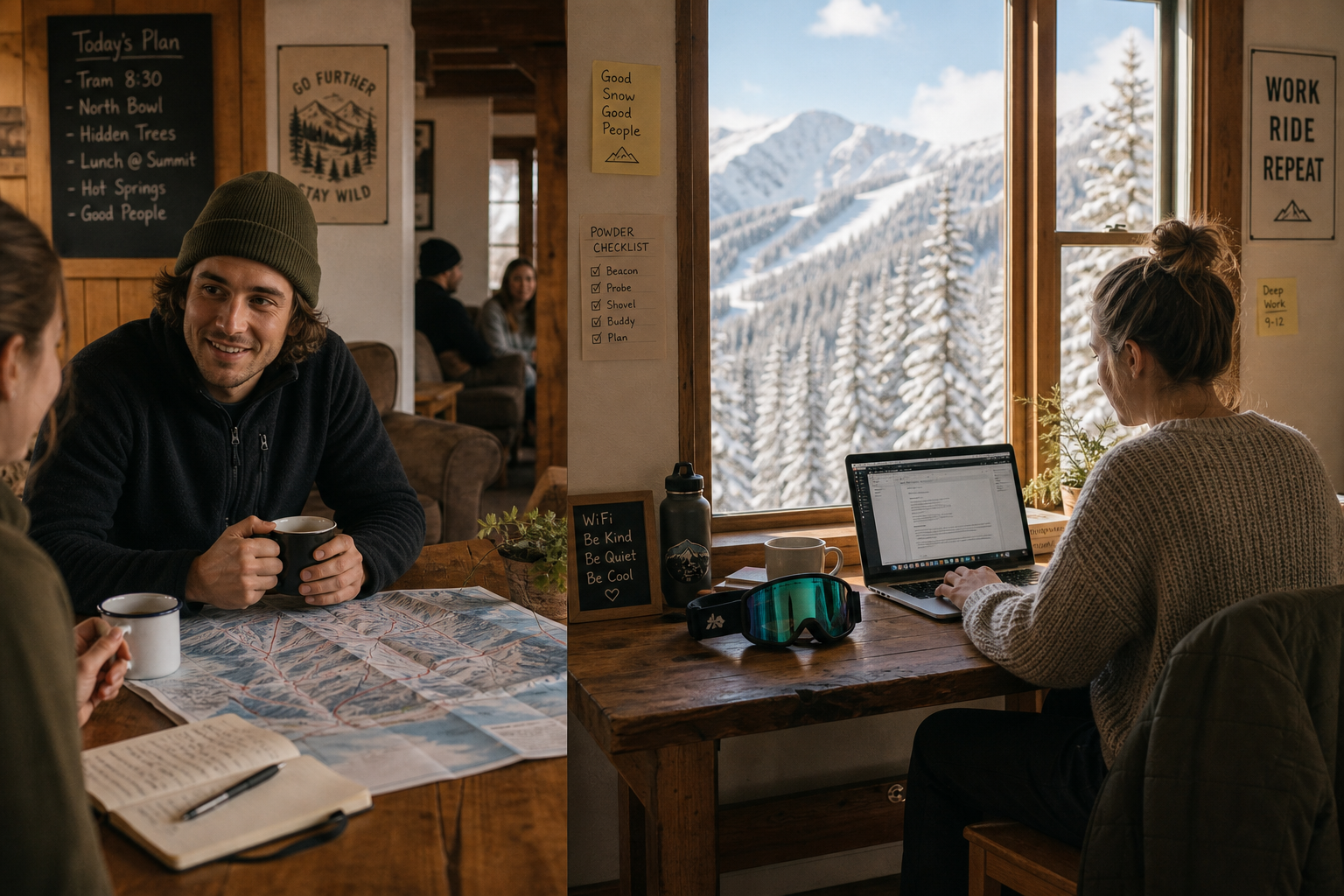
The normalization of remote work has fundamentally altered the typical length of stay and the daily rhythm of ski hostels. Historically, guests arrived on Saturday and left the following Saturday. Today, a growing percentage of the guest list consists of digital nomads who blend their work responsibilities with their time on the mountain.
These guests require specific infrastructure that older youth hostels lacked. They need reliable, high-speed internet, accessible power outlets, and a common area that is quiet enough during the day to take a video call. Their daily schedule is often non-traditional: they might hit the slopes at 8:30 AM, ski hard for three hours, return to the hostel by lunchtime, and work late into the evening while others are socializing.
Because they are staying longer—often booking packages for two or three weeks at a time—digital nomads heavily skew the demographic toward the 28–40 range. They bring a professional, grounded energy to the hostel, effectively neutralizing the “frat house” atmosphere that plagued budget accommodations in the past.
The budget-conscious winter sports enthusiast
The cost of skiing in Europe has surged. Lift passes in mega-resorts routinely exceed 70 to 80 Euros per day, and a simple on-mountain lunch can easily cost 30 Euros. For people who want to ski 15 or 20 days a season, traditional resort lodging is mathematically impossible unless they have an extraordinarily high income.
This economic reality has created a demographic of highly dedicated, budget-conscious winter sports enthusiasts. These are the guests who care deeply about the technical specifications of their equipment—often researching what equipment to bring for a budget European ski trip to avoid expensive in-resort rentals—but care very little about luxury lodging. They prioritize the mountain over the mattress.
For this group, finding a property that bundles the core necessities is a strategic victory. When they find an operator that offers an affordable weekly rate, they tend to become fiercely loyal repeat customers, returning season after season.
How ski hostels compare to traditional resort demographics
The easiest way to understand the ski hostel guest profile is to contrast it directly with the demographics found in traditional Alpine ski resorts. The differences manifest in behavior, daily routines, and spending priorities.
| Metric | Traditional Resort Hotel | Modern Ski Hostel |
|---|---|---|
| Primary Age Bracket | 40–65+ (often families) | 25–35 (often solo/couples) |
| Booking Style | Yearly family holiday | Frequent, shorter, or nomadic trips |
| Morning Routine | Leisurely breakfast, late start | First chairlift priority |
| Evening Focus | Formal dining, private rooms | Communal meals, gear prep, socializing |
| Travel Configuration | Families, large corporate groups | Solo travelers, small groups of friends |
In a traditional resort hotel, guests expect to be catered to, resulting in a demographic that values passive relaxation. In a ski hostel, the demographic is fundamentally active. The hostel is viewed as a launchpad for mountain exploration. This shared sense of purpose creates a surprisingly cohesive environment, even when a 21-year-old snowboarder is sharing a drying room with a 50-year-old ski tourer.
The influence of the all-inclusive model on the guest profile
The operational model of a hostel directly dictates the type of guest it attracts. A bare-bones hostel with no food service and a confusing public transit connection will naturally attract the youngest, most resilient backpackers because older demographics will simply refuse to deal with the logistical friction.
Conversely, when a hostel adopts a structured, all-inclusive package model, the demographic immediately broadens and matures. Consider the approach taken by Ski Hostel, based at Relais de Dranse in Liddes, Switzerland. Rather than offering just a cheap bed, the brand caters to the modern, convenience-seeking traveler by bundling the entire alpine experience into 6- or 7-night packages.
When an accommodation provider includes daily mountain shuttle transfers and full-board dining alongside the room, it fundamentally changes who books the trip. It attracts professionals who have limited time off and want a hassle-free experience without paying luxury resort premiums.
The impact of bundled lift passes
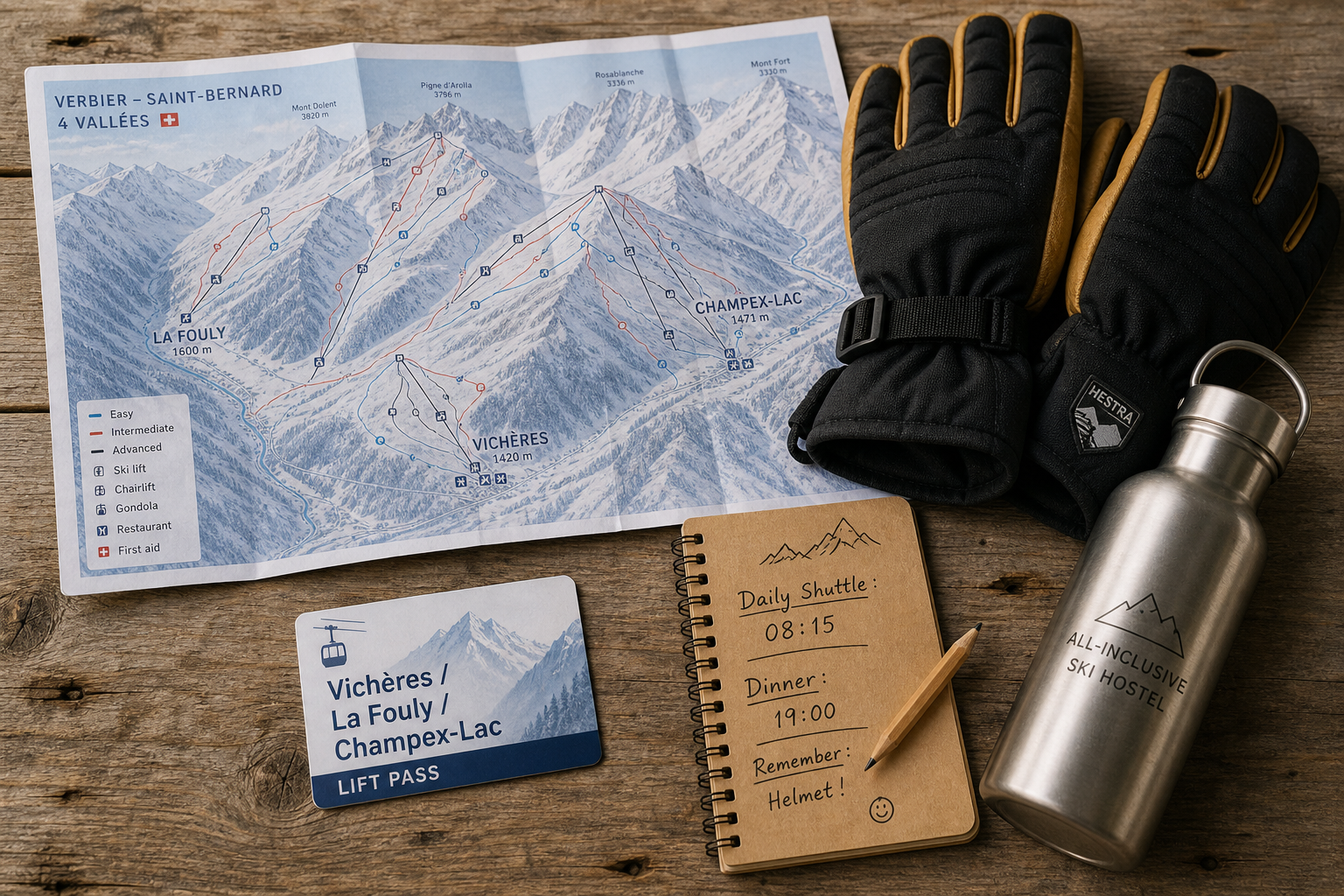
Including lift passes in the accommodation package is a massive demographic driver. Ski Hostel packages include passes for three specific Swiss Alps resorts: Vichères-Liddes, La Fouly, and Champex-Lac.
By focusing on these authentic, high-quality regional resorts rather than the overcrowded, hyper-expensive mega-resorts, the hostel attracts a specific type of skier. These guests are less interested in the status symbol of skiing at a globally famous resort and more interested in uncrowded pistes, genuine Swiss alpine culture, and excellent snow conditions. They are savvy travelers looking for the smartest way to experience the Valais region.
This approach naturally filters out the high-maintenance luxury crowd while pulling in guests who are actively researching how to plan an affordable ski trip in the Swiss Alps. The resulting guest mix is down-to-earth, mountain-focused, and appreciative of the value provided.
Full-board dining and community building
Food logistics heavily influence the hostel demographic. Self-catering kitchens in youth hostels are famous for being crowded, messy, and stressful—an environment that many travelers over the age of 25 prefer to avoid.
When a property offers full-board dining—providing breakfast, a packed lunch for the mountain, and dinner—it shifts the demographic toward guests who value their time. If you are comparing half board vs full board for an active ski holiday, the full-board option at a hostel creates a much stronger sense of community.
Imagine a typical Tuesday evening at a mountain property in Liddes. At 7:00 PM, thirty guests from twelve different countries sit down together for a hot, prepared meal. The 28-year-old remote worker, the 42-year-old solo traveler, and the 24-year-old graduate student are all sharing the same food at the same time. The shared meal forces interaction in a way that disparate cooking schedules never could. This predictable, communal rhythm is highly attractive to solo travelers and digital nomads who crave connection but do not want the burden of organizing it themselves.
Regional differences in European ski hostel guests
The demographic profile of a ski hostel can also shift dramatically depending on which country you are in. The European Alps are not a monolith, and different national ski cultures attract different crowds.
The French Alps
Hostels and budget clubs in the French Alps tend to skew slightly younger and are heavily influenced by the presence of massive, purpose-built ski domains (like the Three Valleys). The clientele here often prioritizes high-mileage piste skiing and vigorous après-ski. The demographics are heavily domestic (French) with a strong influx of British university ski clubs during the university holidays.
The Austrian Alps
Austria is world-renowned for its aggressive après-ski culture. Hostels located in towns like St. Anton or Ischgl frequently attract a demographic heavily focused on nightlife. The age range remains broad (20–40), but the psychographic leans heavily toward groups of friends prioritizing the party over the first chairlift.
The Swiss Alps
Switzerland, and specifically regions like the Valais, attracts a distinct demographic. Because Switzerland is generally more expensive, the budget-conscious travelers who figure out how to navigate it are usually highly resourceful and deeply committed to the sport.
Properties here, such as those discussed in comparisons of ski hostel packages vs youth hostels in Valais, tend to attract a slightly older, more international, and highly active demographic. The guests here are often freeriders, ski tourers, and experienced mountain enthusiasts who appreciate the dramatic terrain and reliable snow of the Swiss Alps. They are in bed by 10:30 PM because they know the conditions in the morning require their full attention.
A snapshot of a modern ski hostel common room
To truly grasp the demographic mix, you have to picture the physical environment on a mid-winter evening.
Walk into the common area at Relais de Dranse after dinner. In one corner, a 31-year-old software developer from Berlin is on her laptop, clearing a few emails before closing out her workday. At the main table, a 45-year-old teacher from the UK is spreading out a trail map, discussing the next day’s tree skiing at Vichères-Liddes with a 24-year-old Australian on a gap year. By the gear room, a couple in their late twenties are adjusting their bindings and discussing whether they should utilize the optional equipment rentals for a powder board the next day.
There is no blasting club music. There is no chaotic drinking game dominating the room. There is simply a low hum of multilingual conversation focused entirely on the mountain, the snow, and the logistics of the next day. It is a highly functional, deeply respectful environment engineered by and for people who love winter sports.
FAQ: Age ranges and expectations at ski hostels
Are ski hostels only for teenagers and college students?
No. While teenagers and college students do use ski hostels, the primary demographic for modern, independent mountain hostels is 25 to 34 years old, with strong representation in the 35–45 bracket. The stereotype of the chaotic youth hostel does not accurately reflect properties designed specifically for adult winter sports enthusiasts.
Is there a maximum age limit for booking a ski hostel?
The vast majority of independent European ski hostels have no maximum age limit. Guests in their 50s, 60s, and beyond are routinely welcomed and often praise the intergenerational social atmosphere. Only a few specific tour operators enforcing “18-30” club rules utilize strict age cutoffs.
Are dorms separated by age or gender?
Most hostels do not separate dormitories by age, as room assignments are based on booking efficiency and group size. However, almost all high-quality hostels offer the choice between mixed-gender and female-only dormitories. If sharing a room with a diverse age group is not your preference, you can typically book a private room while still retaining access to the hostel’s communal areas, shuttles, and dining services.
Do older guests feel out of place in ski hostels?
Generally, no, provided they choose the right type of hostel. An older guest might feel out of place in a 300-bed party hostel in a major urban center. However, in a mountain-focused ski hostel offering full-board packages and daily slope shuttles, the shared love of skiing entirely overrides age differences. The mountain is the great equalizer, and conversations flow easily when everyone has the same goal for the following morning.