
What equipment to bring for a budget European ski trip
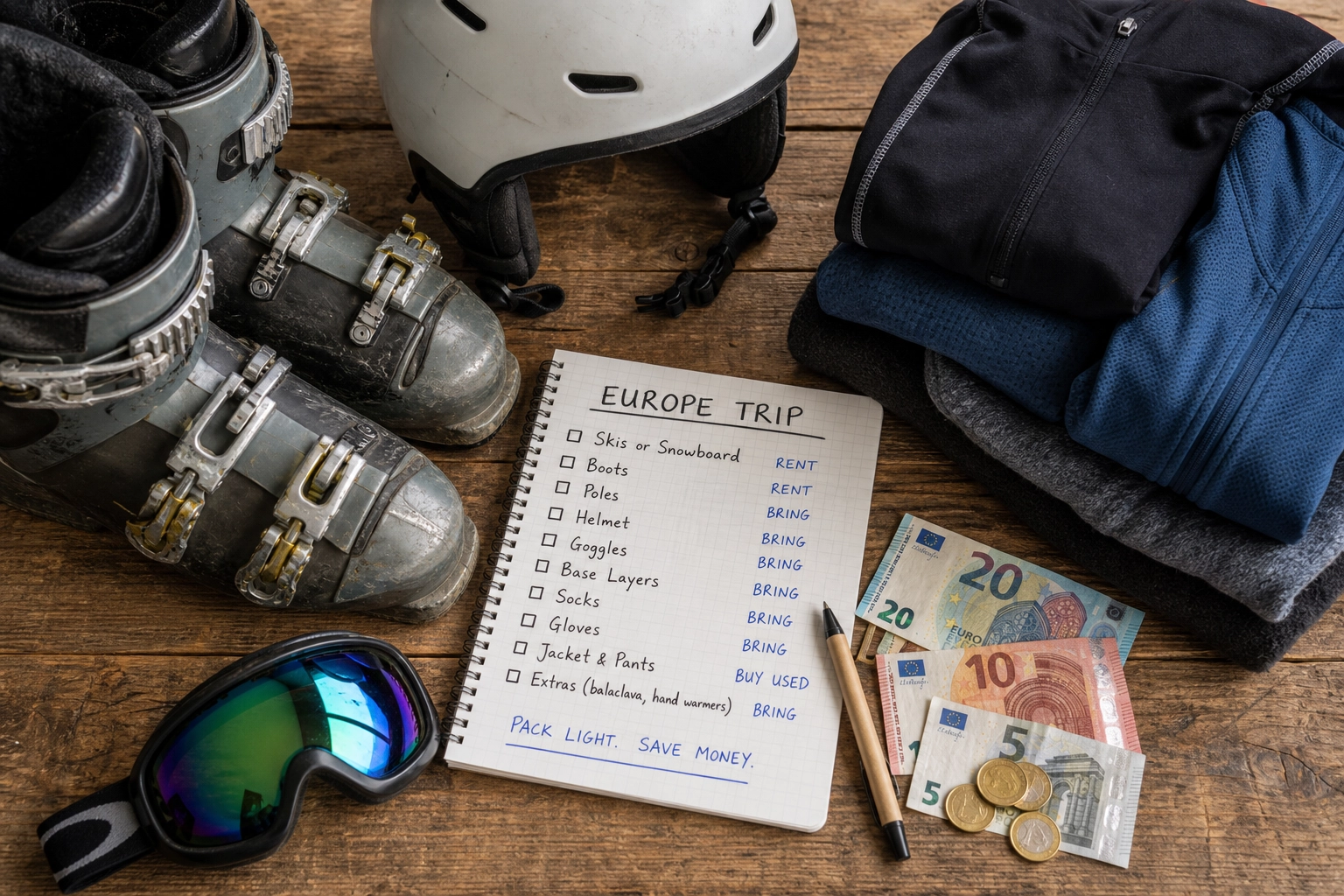
Packing for a European ski trip on a budget forces you to make calculated trade-offs. If you bring everything from home, airline baggage fees, train transfers, and bulky luggage can quickly eat into your savings. If you arrive with an empty duffle hoping to rent or buy everything in an alpine village, peak-season resort prices can shock your bank account on day one.
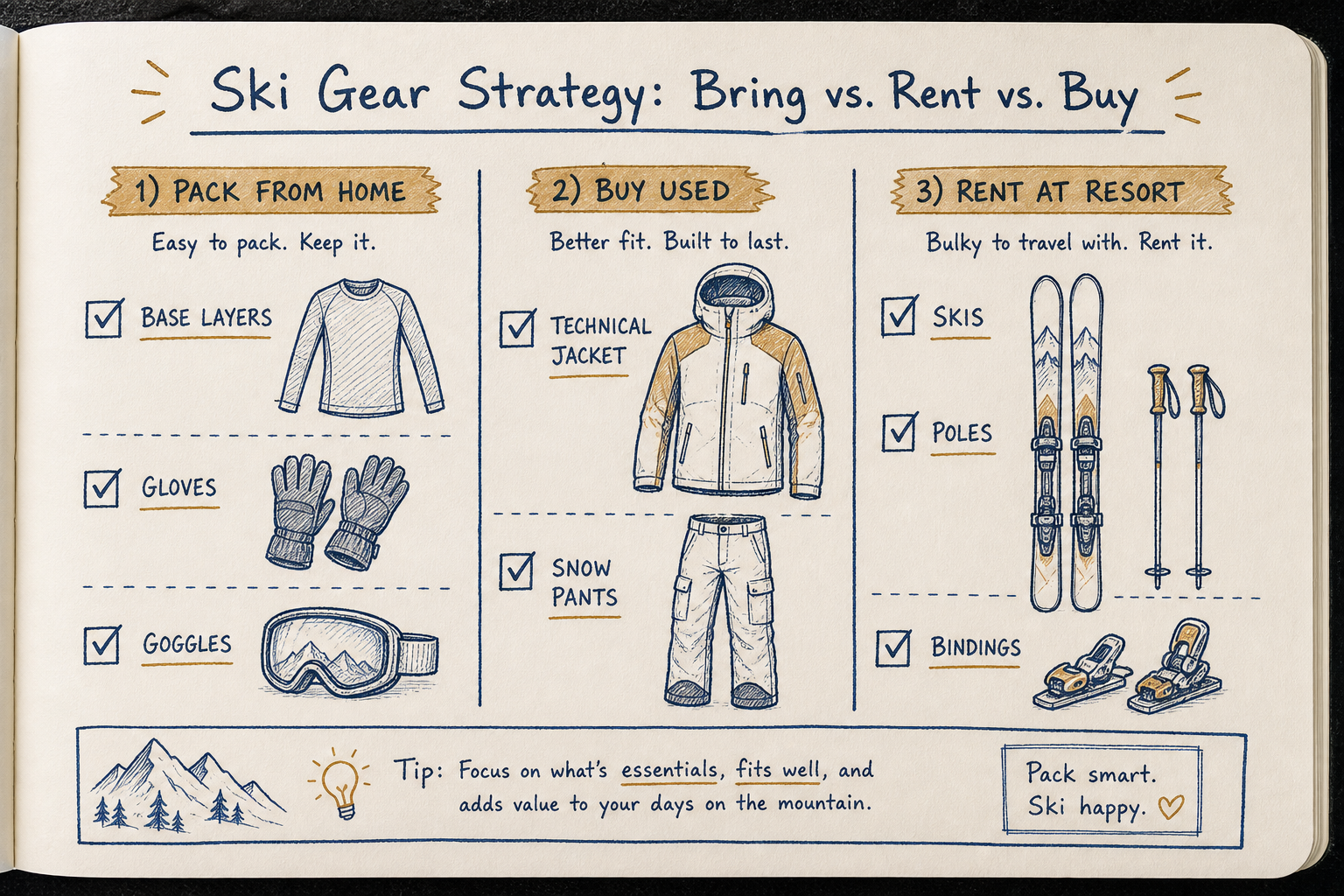
The most affordable way to ski the Alps or the Pyrenees is not to haul your entire gear shed across borders, nor is it to rent every single item at the base of the gondola. True budget efficiency comes from a hybrid strategy: invest in lightweight, versatile clothing you bring from home, acquire select used ski equipment wisely, and leave heavy, oversized hardware to local rental shops.
The Economics of Ski Luggage: Bring vs. Rent vs. Buy Used
Before packing a single bag, look at the transit math. Budget airlines across Europe and transatlantic carriers treat ski bags as specialty sports equipment. A dedicated ski bag with skis and poles typically costs between €40 and €90 ($45 to $100) each way. If your itinerary involves connecting flights or discount carriers such as easyJet or Ryanair, sports baggage fees can easily add €150 to €200 to your round-trip transit costs.
When you compare that cost to equipment rental rates in European valleys, the financial advantage of flying with your own planks often disappears. According to rental guides compiled by Mountain Marker, hiring standard carving or all-mountain skis in mid-tier European resorts often averages €90 to €140 for a full six-day week when booked online in advance.
If you own an older, heavy pair of used skis that you bought for €80 at a garage sale, paying €160 in round-trip airline fees to transport them makes little sense. In that scenario, you pay twice the value of the equipment just to drag it through airports and train stations.
The equipment equation changes, however, when it comes to soft goods, personal safety items, and boots:
- Pack from home: Base layers, mid-layers, technical outerwear, gloves, goggles, socks, and personal accessories. These items are expensive to rent, difficult to find in budget varieties inside high-end resort boutiques, and compact enough to fit into a standard carry-on or regular checked bag.
- Buy used before you travel (select items): Quality brand-name technical outerwear shells, second-hand ski pants, and fleece layers.
- Rent at the resort: Skis, snowboards, bindings, and poles. Modern rental fleets give you freshly tuned edges, base wax matched to current snow temperatures, and zero airline transit hassle.
- The grey area (Boots and Helmets): If you already own comfortable, properly fitted boots, bringing them in a boot bag (often counted as regular carry-on luggage on full-service carriers) is well worth the effort. If not, renting boots alongside your skis keeps travel lightweight and flexible.
| Gear Category | Best Budget Strategy | Typical Cost Range | Why This Approach Works |
|---|---|---|---|
| Skis / Snowboard & Poles | Rent in resort (online advance) | €80 – €150 / week | Avoids €90–€180 airline sports baggage fees and train transit strain. |
| Ski Boots | Bring personal pair or rent in resort | €40 – €70 / week (rent) | Fit is everything; do not buy cheap used boots without professional checks. |
| Outerwear (Jacket & Pants) | Buy used high-end or bring owned | €40 – €100 (used purchase) | Resort boutiques charge premium prices; renting clothing is rare and costly. |
| Base & Mid-Layers | Bring from home (merino/synthetic) | €30 – €80 (total kit) | Multi-use clothing for travel days, hostel lounging, and slope layering. |
| Goggles & Accessories | Bring from home | €25 – €60 (new/used) | Small, lightweight items that carry inflated price tags in mountain shops. |
| Helmet | Rent in resort or bring owned | €15 – €30 / week (rent) | Eliminates safety risks associated with second-hand impact foam. |
What to Pack from Home: The Soft Goods and Layering System
Mountain weather in Europe can shift from blazing alpine sun at 2,500 meters to wet, freezing fog within an hour. Trying to stay warm by wearing one massive, heavy winter coat is inefficient and uncomfortable. Instead, adopt a modular technical layering system.
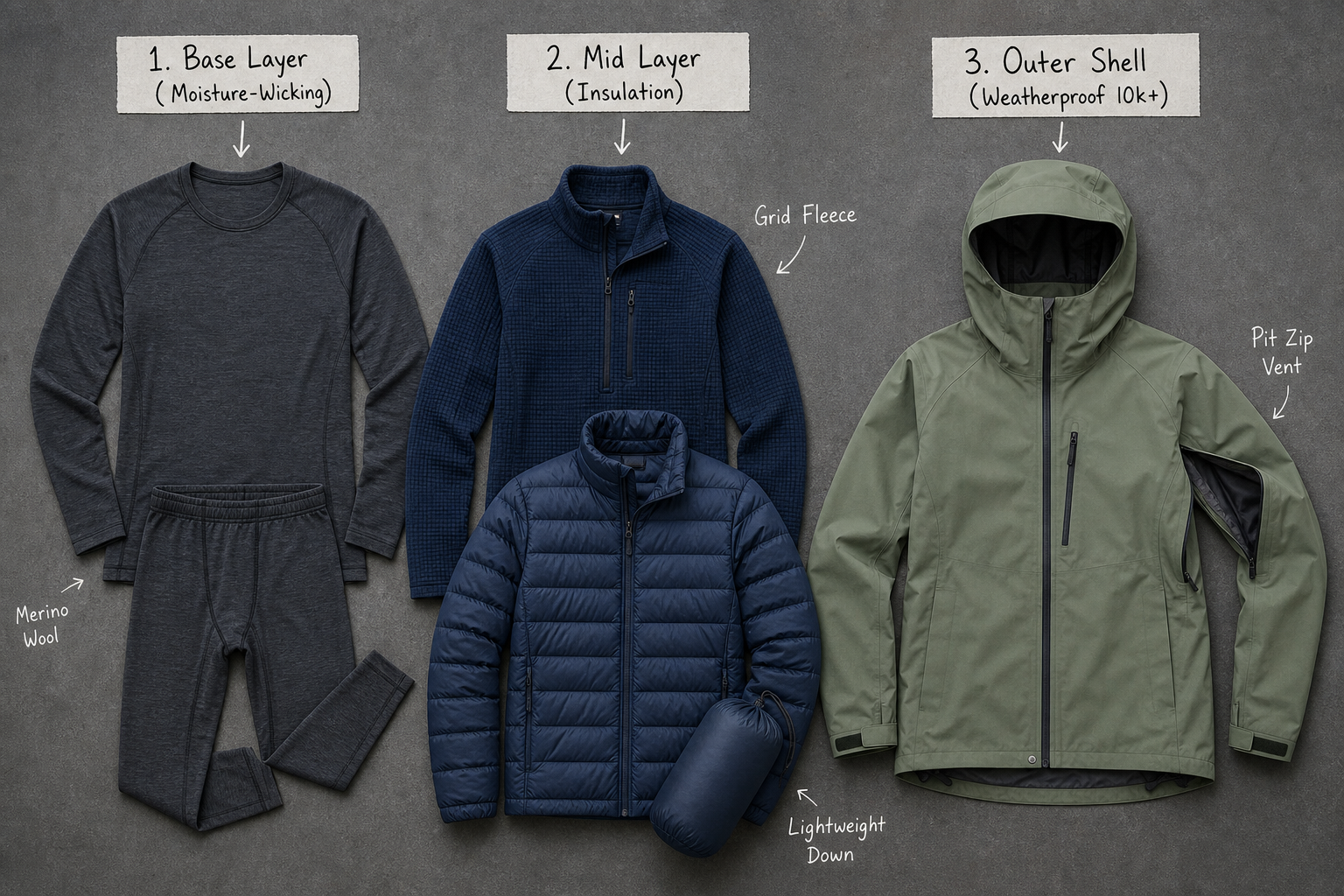
A proper three-layer system traps warm air while moving moisture away from your skin during intense exertion. Packing versatile layers also keeps your overall bag weight low, leaving room for casual clothing during downtime at your lodge.
1. Next-to-Skin Base Layers (2 to 3 Sets)
Your base layer manages sweat. Wet skin cools down twenty times faster than dry skin in cold environments, making cotton shirts and standard gym sweatpants dangerous choices on the mountain.
- Material: 100% Merino wool or high-grade synthetic polyester blends (such as Capilene or Polypropylene). Merino wool naturally resists odor retention over multiple consecutive days of skiing, which is ideal if you are staying in communal accommodation with limited laundry facilities.
- Quantity: Two to three long-sleeve tops and one to two pairs of thermal leggings are sufficient for a seven-day trip. As outlined in the comprehensive packing guidelines from the Ski Club of Great Britain, rotating two or three quality merino wool tops allows one to air out while you wear the other, keeping pack volume minimal.
- Fit: Snug against the skin without restricting mobility.
2. Insulating Mid-Layers (1 to 2 Pieces)
The mid-layer traps your body heat. The thickness you need depends on whether you run warm or cold and the time of year you visit the Alps.
- Fleece: A classic grid-fleece pullover or micro-fleece jacket provides breathable insulation that still works if slightly damp.
- Packable Puffer Jacket: A lightweight synthetic down or 650+ fill power down jacket is an exceptional mid-layer for freezing January storms. It doubles as your primary walking-around coat when exploring town in the evenings.
- Design Tip: Look for mid-layers with a quarter-zip or full-zip front. This allows you to dump excess heat quickly while standing in lift lines without taking off your outer shell.
3. Weatherproof Outer Shell (Jacket and Pants/Bibs)
Your outer layer defends against biting wind, wet chairlifts, falling snow, and slush.
- Waterproofing & Breathability Ratings: Aim for minimum ratings of 10,000mm waterproofing and 10,000g breathability (often written as 10k/10k). If you ski in regions known for wet snow or frequent storms, 20k/20k or Gore-Tex membranes offer superior protection.
- Shell vs. Insulated: For maximum budget flexibility, choose an uninsulated technical shell jacket. An uninsulated shell allows you to ski in mild spring sunshine with just a base layer underneath, or layer up with your fleece and puffer jacket during mid-winter blizzards.
- Key Features: Underarm ventilation zips (pit zips), an adjustable helmet-compatible hood, a dedicated ski pass pocket on the left forearm (standard for European RFID lift gates), and internal snow skirts.
The technical clothing overview from the Ski Club of Great Britain emphasizes that a technical shell combined with adjustable thermal layers outperforms a heavy insulated coat across varied alpine elevations.
4. Peripherals and Accessories
These small items protect your extremities, where frostbite and heat loss occur first:
- Ski Socks (3 Pairs): Bring dedicated, over-the-calf ski socks made from wool or technical synthetic blends. Never wear standard cotton tube socks or double up two pairs of socks. Wearing two pairs creates friction, cuts off blood circulation, and causes painful blisters.
- Gloves or Mittens: Waterproof, insulated gloves with leather or reinforced palms. If your fingers get cold easily, choose mittens over five-finger gloves. Consider packing thin silk or synthetic glove liners for extra warmth on sub-zero mornings.
- Neck Gaiter or Buff (2): A fleece or merino wool neck tube protects your face from windburn and high-altitude UV rays. Bring two so you have a dry replacement if one becomes damp from your breath.
- Ski Goggles: Bring goggles with interchangeable lenses or a versatile Category 2/3 all-conditions lens. Orange, rose, or amber tints handle low-light flat visibility on stormy days, while mirrored, darker lenses protect your eyes from intense alpine sun.
- Beanie / Warm Hat: For walking around the village, traveling, and après-ski gatherings.
The Used Ski Equipment Playbook: What to Buy Second-Hand (and What to Avoid)
Sourcing second-hand winter gear is one of the most effective ways to lower the entry cost of winter sports. Premium ski gear depreciates rapidly as manufacturers release new top-sheet graphics each autumn. However, blind purchases in the used market can lead to equipment failure, safety hazards, or unusable items.
Knowing which categories are safe to buy used and which require extreme caution will protect both your wallet and your physical safety.
+-------------------------------------------------------------------+
|               USED SKI EQUIPMENT: SAFETY & VALUE MATRIX           |
+---------------------------------+---------------------------------+
| SAFE TO BUY USED                | BUY WITH EXTREME CAUTION        |
|                                 |                                 |
| • Technical Outerwear Shells    | • Used Skis (Check DIN & Edges) |
| • Ski Poles (Inspect Straight)  | • Ski Boots (Fit & Shell Age)   |
| • Mid-Layers & Fleece           | • Avalanche Transceivers        |
| • Equipment Travel Bags         |                                 |

+---------------------------------+---------------------------------+
| NEVER BUY USED                  |                                 |
|                                 |                                 |
| • Helmets (Hidden EPS Damage)   |                                 |
| • Expired Bindings (>10 Years)  |                                 |
| • Severely Packed-Out Boot Liners                               |

+-------------------------------------------------------------------+
High-Value Used Buys: Outerwear and Hard Shells
Technical outerwear from reputable brands (such as Patagonia, Arc’teryx, Norrøna, The North Face, or Helly Hansen) is built to withstand extreme abuse. High-end jackets that retail for €400 to €700 often appear on second-hand marketplaces (Vinted, eBay, Facebook Marketplace, or local gear swaps) for €60 to €120.
When evaluating used jackets and pants:
- Check the Seam Taping: Turn the garment inside out and inspect the heat-sealed tape along the seams. If the tape is dry, flaking, or peeling away, the garment has lost its waterproof integrity.
- Test the Zippers: Water-resistant zippers (YKK AquaGuard) are expensive to replace. Make sure the main zipper and pocket tracks slide smoothly without missing teeth.
- Inspect the Cuffs and Hems: Look for edge cuts on the inner ankle guards of ski pants. Small surface nicks are normal; deep tears through the gaiter fabric indicate heavy wear.
- Revive the DWR: You can restore the water-beading performance of a used waterproof shell by washing it with technical apparel detergent (such as Nikwax Tech Wash) and tumble drying it on low heat to reactivate the Durable Water Repellent (DWR) coating.
Proceed with Caution: Used Skis and Bindings
Buying second-hand skis requires technical inspection. A pair of used skis that appears to be a bargain can end up being unserviceable if the edges are ground down or the bindings are obsolete.
If you are sourcing used skis for your trip:
- Inspect the Base and Edges: Look closely at the metal edges along the entire length of the ski. If the steel edge is cracked, rusted through, or ground down so thin that it sits flush with the fiberglass sidewall, the ski cannot be tuned again. Check the base for deep “core shots” (gouges that penetrate through the black P-Tex base to expose the wooden or composite core). Core shots that were poorly repaired with regular glue can rot the ski from the inside.
- Check the Camber and Rocker Profile: Place both skis base-to-base on a flat surface. They should match symmetrically in their flex pattern, arch, and tip flare. If one ski is flat or warped, the internal core has failed.
- The 10-Year Binding Indemnification Rule: Ski bindings contain internal springs and release mechanisms that degrade over time. Every season, binding manufacturers publish an “indemnified binding list.” Certified ski technicians will only adjust, test, and set bindings that appear on this active safety list. Most shops will flatly refuse to touch bindings older than 8 to 10 years due to liability. If you buy vintage skis with outdated bindings, you may not find a single European shop willing to set them to your boots.
High Risk: Used Ski Boots
Ski boots are the single most important piece of equipment you will use. They transfer the physical movements of your legs, ankles, and feet directly into the edges of your skis. An ill-fitting pair will ruin your holiday with agonizing shin bang, numbness, cold feet, and reduced edge control.
Why buying used ski boots online is risky:
- Molded Liners: Modern boot liners mold to the original owner’s unique foot shape, ankle bones, and pressure points. Over 40 to 60 ski days, the foam “packs out” and loses its structural support. When you slip into a heavily used boot, your heel will slip, forcing you to over-tighten the buckles until your feet go numb.
- Micro-Cracking in Aged Plastic: Ski boot shells are made from polyurethane or polyolefin plastics. Over 7 to 10 years, UV light and temperature swings degrade the plasticizers, making the shell brittle. Old used boots can crack completely down the clog when flexing hard in freezing temperatures.
If you are on a tight budget, rent boots at the resort where a boot-fitter can swap sizes freely if you experience hot spots, or visit a professional boot-fitter at home who can match your foot anatomy to a properly sized new shell.
Never Buy Used: Helmets
Never buy a second-hand ski helmet under any circumstances. Helmets use expanded polystyrene (EPS) foam liners designed to compress and absorb energy during an impact. Once the EPS foam compresses during a hard fall, it does not bounce back; its ability to protect your brain from subsequent concussions or fractures is permanently compromised.
You cannot determine whether a used helmet has suffered an internal structural impact simply by looking at the outer plastic shell. A helmet can look flawless on the outside while harboring compromised interior foam. Purchase an affordable, brand-new helmet certified to European safety standard EN 1077 (Class B) or rent one directly from your resort shop for €3 to €5 per day.
Sourcing Used Ski Touring and Off-Piste Gear
If your European trip includes ski touring or guided off-piste descents, the gear requirements expand considerably. Specialized touring equipment—such as pin bindings, climbing skins, lightweight touring boots, and avalanche safety tools—carries high retail prices, making the second-hand market tempting.
For specialized backcountry requirements, the Ski Club of Great Britain touring kit guide provides detailed equipment checklists for alpine touring.
When sourcing used backcountry safety equipment, apply strict safety criteria:
- Avalanche Transceivers (Beacons): Never buy obsolete analogue transceivers or older two-antenna models. Modern avalanche rescue protocols require modern digital three-antenna transceivers with auto-revert search functions and active firmware updates. Verify the battery compartment is free of acid corrosion and conduct range tests prior to traveling.
- Avalanche Shovels: Choose only metal (aluminum) blades and shafts. Second-hand plastic or polycarbonate avalanche shovels can snap when trying to clear dense, concrete-like avalanche debris.
- Climbing Skins: Inspect the plush side for bald patches and test the glue tackiness. If the adhesive leaves sticky residue on your hands or pulls away in gooey strings, the skins will need a full re-glue treatment before they can grip snow on an ascent.
Practical Packing List for a Budget Alpine Stay
Staying in budget-friendly shared accommodations, mountain huts, or ski hostels requires packing practical everyday items alongside your technical mountain kit.
Mountain Hardware (Carry-On or Rent Locally)
- Ski boots (in a dedicated boot bag if bringing your own)
- Ski goggles with low-light and bright-light lenses
- Ski helmet (certified EN 1077)
- Sunglasses with Category 3 or 4 UV protection
Slope Clothing (Worn in Rotation)
- 1 waterproof/breathable technical shell jacket (minimum 10k/10k rating)
- 1 pair waterproof/breathable ski pants or bibs
- 2–3 merino wool or synthetic base layer tops
- 1–2 base layer thermal bottoms
- 1 lightweight fleece pullover or grid fleece
- 1 packable down or synthetic insulated jacket
- 3 pairs dedicated over-the-calf merino ski socks
- 1 pair waterproof insulated ski gloves or mittens
- 1 pair thin liner gloves
- 2 neck gaiters / Buffs
Hostel and Travel Essentials
- 1 pair comfortable winter walking shoes or snow boots with deep rubber lug traction (for icy village streets)
- 2 sets casual evening clothes (comfortable t-shirts, jeans, or lounge pants)
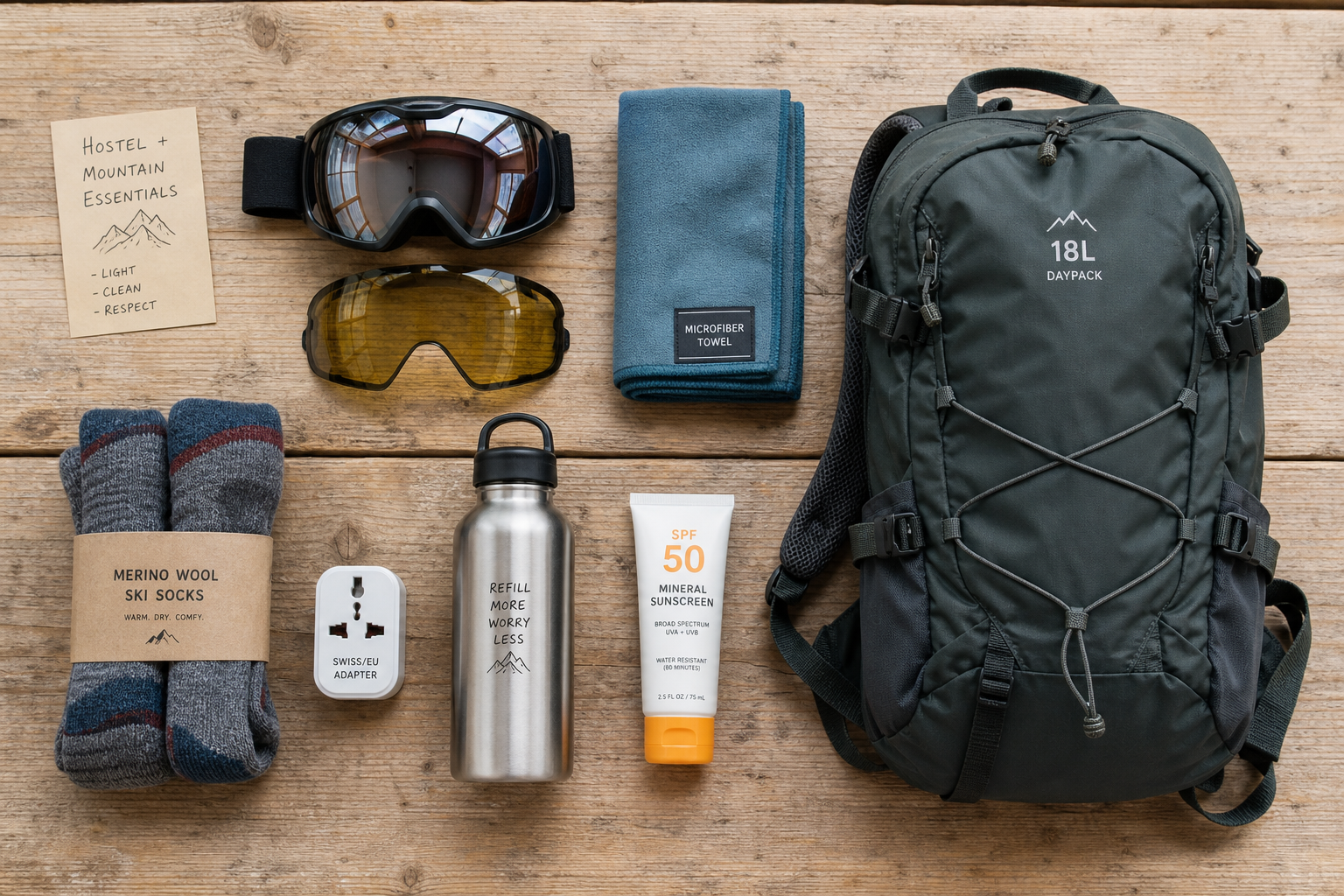
- 1 compact microfiber travel towel (if not provided by your lodging)
- 1 pair lightweight flip-flops or slip-on shoes (for shared shower areas and communal spaces)
- 1 European plug adapter (Type C/J for Switzerland, Type C/E/F for France, Austria, and Italy)
- 1 portable power bank (lithium-ion phone batteries drain rapidly in sub-zero alpine temperatures)
- 1 swimsuit (for hotel wellness areas, public thermal baths, or hostel saunas)
- 1 small ski-ready daypack (15 to 20 liters) with chest and waist straps for carrying water, sunscreen, and spare layers on the mountain
Toiletries and First-Aid Kit
- High-SPF mineral sunscreen (SPF 30 or 50; high-altitude snow reflection increases UV exposure significantly)
- SPF 30+ moisturizing lip balm
- Blister prevention kit (Compeed patches, athletic tape, or moleskin)
- Ibuprofen / muscle recovery balm
- Reusable water bottle or hydration flask
Logistics: Moving Gear Across Europe Without Wasting Money
Managing your equipment efficiently once you land in Europe is just as important as packing the right items. Navigating trains, regional post buses, and mountain transfers with multiple heavy bags can quickly turn a budget holiday into an exhausting chore.
Navigating Public Transit with Ski Luggage
European alpine rail systems—such as Switzerland’s SBB, France’s SNCF, and Austria’s ÖBB—are among the most efficient transit networks in the world. However, mountain branch lines and regional post buses feature narrow aisles, overhead racks designed for small bags, and tight transfer windows (often 4 to 6 minutes between connecting platforms).
- If you travel with a 50-pound rolling double ski bag, you will spend your transit days wrestling luggage across icy station plazas, up steep overhead train ramps, and into crowded luggage vestibules.
- If you pack a single 40-liter carry-on duffle with your clothing and rent your skis directly at your destination, navigating alpine public transit becomes fast and stress-free.
For travelers weighing accommodation formats, understanding the operational differences between all-inclusive communal packages and traditional hostels can save both money and logistics headaches. Our detailed comparison of ski hostel packages vs youth hostels in Valais outlines how integrated lodging, daily mountain shuttles, and bundled equipment rentals eliminate the friction of organizing multiple bookings independently.
+-------------------------------------------------------------------+
|              AIRLINE & TRANSIT COST BREAKDOWN (ONE WEEK)          |
+---------------------------------+---------------------------------+
| BRINGING FULL GEAR FROM HOME    | HYBRID STRATEGY (RENT HARDWARE) |
|                                 |                                 |
| • Ski Bag Airline Fee: €140     | • Ski Bag Airline Fee: €0       |
| • Train Luggage Surcharge: €0   | • 6-Day Ski Rental: €110        |
| • Checked Luggage Fee: €70      | • Carry-On Only / Std Bag: €40  |
| • Pre-Trip Tune-Up: €45         | • In-Resort Edge/Wax: Included  |
| • Station Locker Fees: €20      | • Station Locker Fees: €0       |
|                                 |                                 |
| TOTAL TRANSIT/GEAR COST: €275   | TOTAL TRANSIT/GEAR COST: €150   |

+---------------------------------+---------------------------------+
Four Common Budget Ski Gear Mistakes to Avoid
1. Packing Bulky Streetwear Sweaters
Packing heavy cotton hoodies and bulky knit sweaters takes up half your luggage space without providing functional mountain warmth. Focus entirely on your technical layering pieces. A sleek grid fleece or lightweight packable puffer jacket looks great during village après-ski while functioning as a high-performance thermal mid-layer on the slopes.
2. Buying the Cheapest Used Skis Online Without Checking Dimensions
Ski geometry has changed dramatically over the past two decades. Buying extremely narrow, straight, 200cm vintage skis from the late 1990s because they cost €30 is a false economy. Outdated skis are difficult to turn in varied snow, exhausting to control on steep groomed pistes, and frequently unsafe due to degraded binding springs. Modern all-mountain rentals (80mm to 90mm underfoot with tip rocker) will make your skiing far more enjoyable and progression-friendly.
3. Wearing Cotton Tube Socks on the Mountain
Cotton absorbs and holds moisture. When your feet sweat during your first run, cotton socks retain that dampness against your skin. By midday, cold mountain air will chill the damp cotton, turning your boots into refrigeration chambers. Investing €15 to €25 in two pairs of proper merino wool ski socks will keep your feet warm, dry, and blister-free all week.
4. Overlooking European Ski Goggle Tint Categories
Skiing in flat light (fog, cloud cover, or heavy snow) with dark, Category 4 high-glare mirrored lenses makes it impossible to see terrain contours, ice patches, or mogul troughs. Always ensure your goggle setup includes either a versatile Category 2 all-mountain lens or a low-light Category 1 lens for stormy days.
Frequently Asked Questions
Is it cheaper to bring my own used ski gear or rent equipment in Europe?
For clothing, goggles, base layers, and personal accessories, it is significantly cheaper to bring your own items or source them second-hand before you leave. For technical hard goods (skis, snowboards, and poles), renting at the resort is usually more economical once you factor in airline sports baggage fees (€80 to €180 round-trip), pre-trip tuning costs, and the logistics of transporting heavy bags on regional mountain trains.
Can you buy used ski equipment directly in European ski resorts?
Yes. Toward the middle and end of the winter season (February through April), many resort rental shops sell off portions of their current-season rental fleets at steep discounts. Local alpine villages also host community ski swaps (often called Bourses aux Skis in France and Switzerland, or Skibörsen in Austria and Germany) where you can purchase well-maintained second-hand gear that has been inspected by local technicians.
How many layers should I wear while skiing in the European Alps?
Follow a three-layer system: a breathable moisture-wicking base layer (merino wool or synthetic), an insulating mid-layer (fleece pullover or lightweight puffer jacket), and a waterproof/windproof technical outer shell. This system allows you to adapt to temperature changes throughout the day by simply opening underarm vents or stowing the mid-layer in your daypack when skiing in sunny spring conditions.